When David Schuftan attended Mountain Valley, he was so organized that staff could count on him to know the daily schedule. He used those outstanding executive skills to thrive academically—and used the skills he learned at Mountain Valley to meet his future partner and weather job uncertainty. Today he lives in St. Louis and works as an engineer for a medical device start-up. We caught up with David, who also just got married, to learn more about his experience as a Mountain Valley resident and alum:
Tell us about your background and your experience at Mountain Valley?
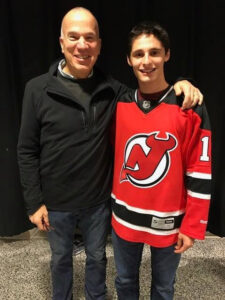 “I grew up in Livingston, New Jersey and went through the public school system through 10th grade. I had bad anxiety and depression for years, and I’d been doing outpatient group therapy since middle school. I was missing a lot of school, and I had been hospitalized for a week at one point. Things weren’t really working. I didn’t feel like I could sustain friendships well and when my academic performance started declining, that was the signal to my family that we needed to do something different.
I didn’t want to go to Mountain Valley, and once I arrived, I wasn’t very receptive for the first couple of weeks. For example, I refused to go on the first weekend trip and didn’t want to talk at all during therapy. I was there for I think 153 days and by the end I was extremely happy to be there. I really enjoyed my time and gained a lot. I wouldn’t be who I am today without it, that’s for sure.
Just being in that disconnected environment helped me not have to worry about my normal life. In the past, even if I was in therapy, I was still going back home, and I think being in a totally disconnected place was really helpful. My clinician at the time was Sharon McCallie-Steller and we still keep in touch—I even invited her to my wedding.
My parents are also really passionate about Mountain Valley as an organization. If you go into the kitchen of the clinical building, they donated money to honor Sharon with a plaque. She was so helpful to me and is part of the reason I’m where I am today.”
What does your anxiety look like?
“I had really bad social anxiety and I’ve been able to adopt the mindset that I don’t really care as much. I’m able to reframe my thoughts and basically have two streams of consciousness. I can separate from the unhealthy thoughts and think about them rationally. That’s definitely a skill I gained at Mountain Valley.
I remember one time I was in a session with Sharon, and she drew an upwards S curve, showing how anxiety was a continuous cycle. The take-home message was that I’d have to separate from it and re-contextualize it to break the cycle, and that diagram is often on my mind.”
What came after Mountain Valley?
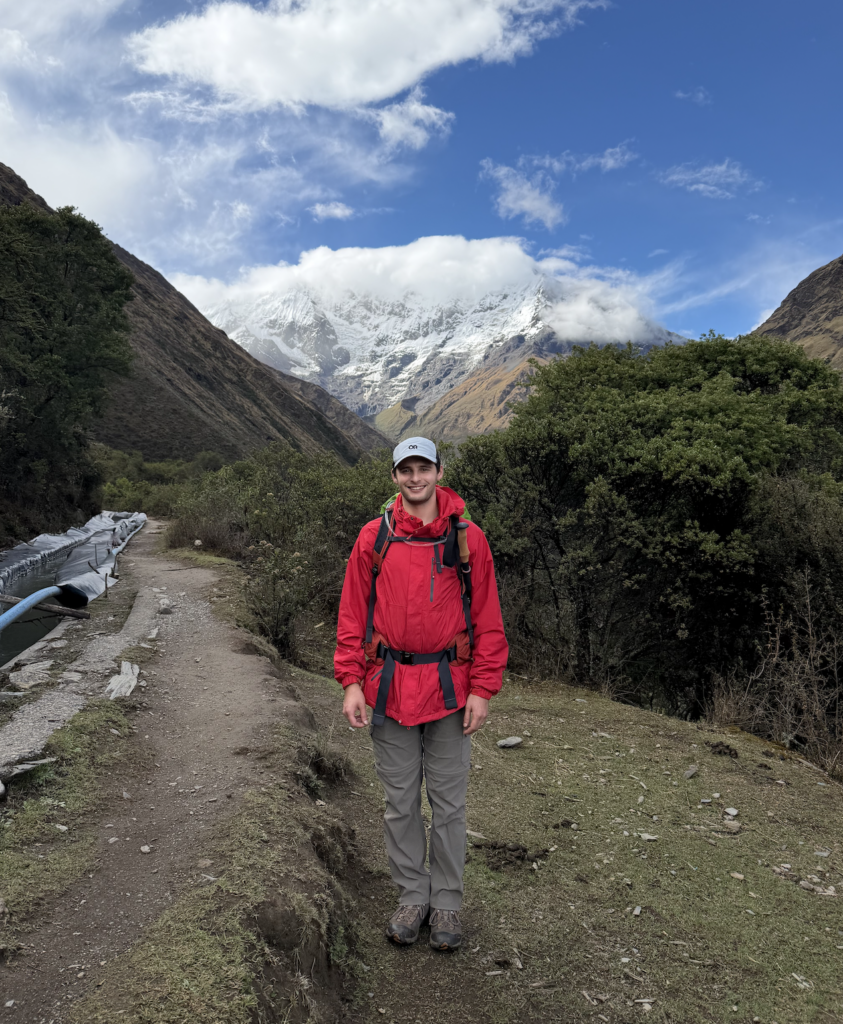
“Although I was initially against it, my parents and therapist made the choice for me to attend a non-therapeutic boarding school. It was really good for me and I was one of the strongest students there academically. It gave me the confidence to grow and do what I wanted. I graduated valedictorian, I was captain of the soccer team, I did set and lighting design in the theater, and I was on the school judicial council.
I also think not living with my parents helped me become more independent. It was the right decision, and it set me up to go to a good university, get a degree and start a successful career. I ended up attending Washington University in St. Louis for biomedical engineering and now I work at a medical device start-up company.”
Tell us about your work in biomedical engineering?
“We are using augmented reality (AR) headsets during a procedure called a cardiac ablation. When the electrical rhythms in the heart aren’t correct, physicians go in with catheters and kill the heart tissue that’s not properly moving electricity. The catheters are placed in an electromagnetic field to track the location, which is used to build a map of the heart. They’ve had this technology since the ‘90s to build a 3D heart map, but it’s always been on a two-dimensional screen.
We’ve started aking the map and making it a 3D hologram by putting it into an AR headset. Because you have binocular vision in the AR headset, you can see depth perception to better understand the 3D geometry, and the physician can control what they see. Because they’re scrubbed using sterile technique when in the operating room, they can’t touch a computer to control what they’re seeing from the map of the heart—instead, they had to have someone else do it. My background wasn’t really in software, but I’ve learned a lot. In my role I also do a lot of documentation, process optimization, and testing and verification.
I started in 2023 and early in 2025, we ran out of money for a bit and the staff was furloughed. The market was really volatile, and no one wanted to give money for start-ups. It was a difficult period, but I think some of the skills I learned at Mountain Valley helped me. I thought about how I could refocus my energy while I waited and eventually they brought me back, although as part of a downsized team. Now things are going well in the company again, which is good because I don’t want to leave St. Louis.”
What do you enjoy about St. Louis?
“I came here for undergrad in 2017 and stayed here during COVID. I met my husband in 2020 and we just got married. We own a house together and have two cats that are our children. He’s from St. Louis and currently in medical school so we’re tied to the area. Life is pretty good.
For a while I was involved in the community as a soccer referee, which helped me with my confidence and gave me more practice communicating assertively. For example, I was refereeing for an adult league, and that was an interesting experience because there were a lot of immigrant teams. I had to be confident in my abilities as I was dealing with different cultures and learning how to understand, rationalize and connect with them.”
What are your long-term career goals?
“I want to continue working as an engineer developing products. I think ideally after my husband graduates and he’s working in a hospital, he’ll identify a problem that we can solve, and we can begin our own start-up company together. I like having my hand in a lot of different areas and being able to do different things every day. I really like that about working for a start-up. Even though what I’m doing isn’t exactly what I imagined during undergrad, I enjoy the people I work with and being able to do so many different things in any given week.”
What would you say to someone considering Mountain Valley, but feels apprehensive about taking that chance?
“I would say it’s totally understandable. You’re in a new place without anyone you know around. You have to be open to what’s suggested and really embrace it, because you’ll likely never have that opportunity again. It really was one of the best times of my life.
Today when I talk to people, I find a lot of them don’t have the emotional skillsets that I have. Even though maybe something chemically in my brain wasn’t quite right, I find that I’m more capable in a lot of ways now, and that is because of Mountain Valley.”