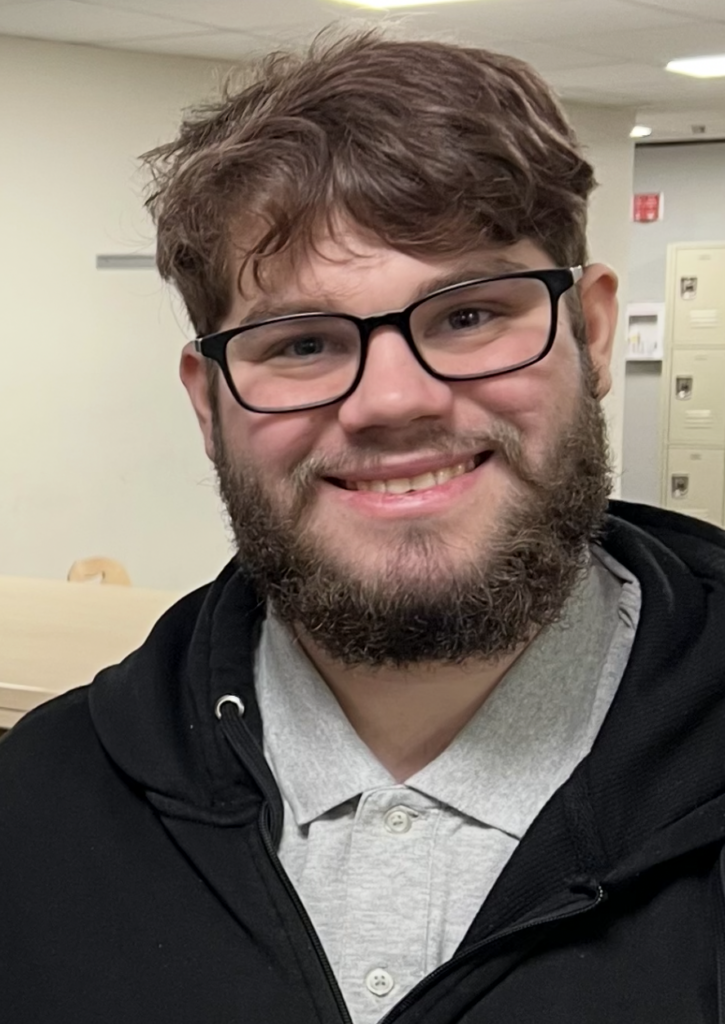
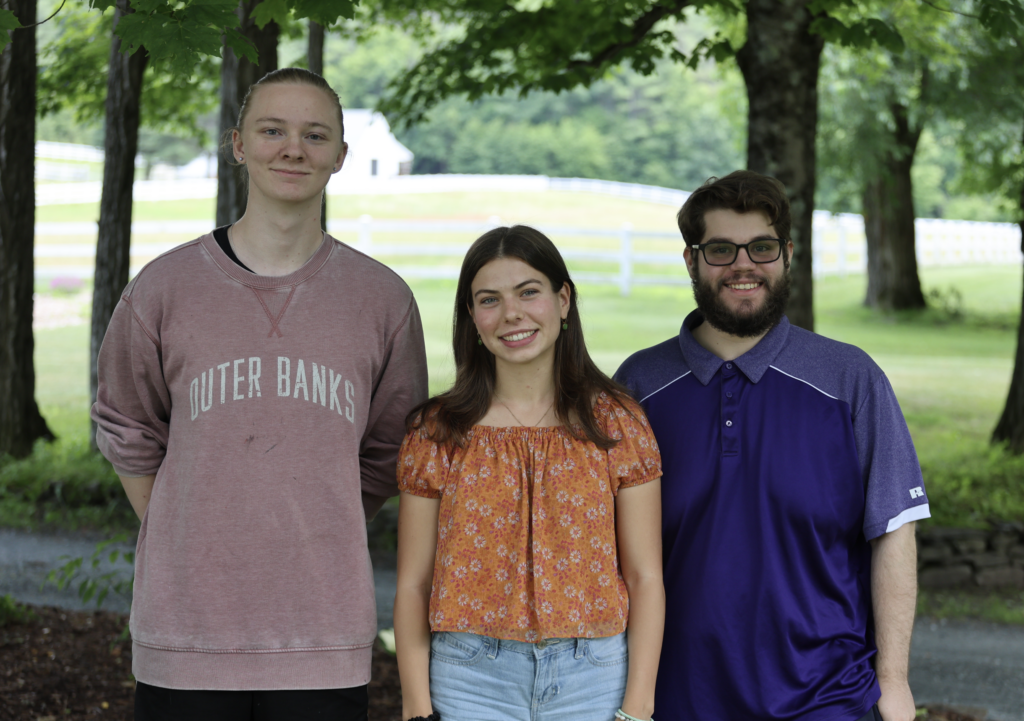
Out of the three Mountain Valley summer interns, James Norris has the most firsthand experience. He attended MV in 2021 after battling anxiety and depression, and his brother also went through the program. Today he’s pursuing a degree in psychology at the University of Rochester, with plans to get a master’s degree in counseling. James decided to return to MV to give back to the community—and he’s been pleasantly surprised with how the resident experience has become even better.
Tell us about your background and how you ended up at Mountain Valley?
“In high school I struggled a lot with anxiety that got progressively worse as it went on. Specifically relating to social anxiety as well as anxiety with food, plus some depressive episodes. It did seemingly get better with COVID, but that was kind of a misnomer because everyone was isolated. My social anxiety went away because I couldn’t socialize, which felt great in the moment. But you know, it was revealed as we phased back out of lockdown that my anxiety had become a lot worse. I had reinforced my brain to not like social interaction during COVID. As things started to phase back in, I faced a lot more friction.
That was kind of the point where I started to mentally stonewall a bit with my therapist and doctors. I would come to appointments, but I wouldn’t be responsive to the point of productive communication. I had a lot of stress around college applications—I didn’t want to visit campuses because I felt like I wasn’t supposed to be there. Looking back, it seems a bit silly, but in my mind, it was like ‘Oh God, everyone can tell I’m not supposed to be here.’
At that point, my therapist and my parents talked and basically decided it would be best for me to go to residential treatment. I agreed but I obviously wasn’t thrilled about it. I did a lot of work on social anxiety exposures, and a little bit with some food exposures, but that was kind of secondary. Over 62 days, I worked with a clinician and in the milieu to get more confident in my social skills and feel more comfortable going out.”
What do you think was one of your most helpful exposure moments?
“When I attended Mountain Valley, I had already been accepted to college, but it was still a little up in the air if I would go or defer for a year and stay at Mountain Valley longer. I was talking to my clinician and told them, ‘You know, when I toured campuses, I had so much anxiety and felt so out of place, like something was wrong.’ My clinician decided we’d go to Dartmouth’s campus to walk around. I felt even more out of place because on top of being a college that I wasn’t accepted to, it was Dartmouth, which is very recognizable.
That was one of the biggest exposures I did, and it stands out in my mind as the one that got the ball rolling on getting better at anxiety stuff and facing fear. The goal was to go walk around a little bit, for 15 or 20 minutes. I remember feeling so anxious beforehand and relieved when it was over. Unpacking it in therapy later, we talked about why I felt so relieved and that there wasn’t actually anything to be relieved from. That exposure work helped intellectualize my anxiety a bit.”
What came next?
“I ended up going to college and had a great freshman year. I was in a group called Focus Collegiate that help college students manage work with executive functioning skills. I took a summer class and thought ‘Wow, that went great, I don’t think I need Focus Collegiate anymore.’ But in my sophomore year, I ran into roadblocks early on. I got sick and I couldn’t make class for very real reasons. That spiraled my ADHD—not going to class brought out another version of my anxiety around executive functioning skills, which were lacking.
One thing led to another, and I ended up in a depressive anxiety spiral. I didn’t attend class much at all that year and I claimed it as medical leave, as well as the following year. My parents asked if I wanted to go back to Mountain Valley, but I decided to do some behavioral coaching, working with a virtual and in-person coach. As I did that work, going back through the exposures Mountain Valley taught me helped me as I worked on executive functioning. I ended up going back to school and I’m currently pursuing my psychology degree—my goal is to be a therapist or psychologist.”
Now you’re back at Mountain Valley, this time as a summer intern. Tell us more about that?
“I have always been very grateful for Mountain Valley and how it helped my social anxiety. I recognize it didn’t solve all my problems, but I’ve always been thankful. I remembered that an intern program existed in some capacity from when I was there. I thought it would be a great experience and a way to give back to a community that gave a lot to me.
I also wanted to sit down with Zack Schafer and talk about my suggestions for how the program could improve. I had some ideas for how it could be even more helpful—but when I came back, I saw I didn’t even need to suggest changes because they’d already been implemented. It’s been five years since I attended, which is a long time, but it really isn’t institutionally.”
What are some of the changes you’ve noticed?
“The switch to a longer 90-to-120-day program, which I think is helpful. When I was there, the schedule was much more intense and I think the residents still do intense work, but it’s not as compressed. The schedule now gives residents more space to recover after putting in the work.
Another change is all the autonomies that have been introduced. When I was a resident, we only had independent autonomy, but now there is tech autonomy, walking autonomy, and so on. I think that’s such a great thing for giving residents some of the freedoms back, and it also better mimics normal life. If you don’t have access to tech at all in treatment, that’s not how you’re going to live in the future. Eventually the goal is for you to leave Mountain Valley and be in the world, and you’ll have access to your phone. You need to learn how to have a healthy relationship with it.
We also have gym autonomy now, so this gives residents more agency to move their bodies in ways that feel good. It gives the kids flexibility to meet their needs in community while still respecting the therapeutic process.
The biggest change I’ve noticed is the OT scheduling. Now there’s a focus on how you practice therapy every day in the occupations, and how you integrate some of these very helpful techniques into your everyday life. I think it’s especially helpful to have OTs available on the day shift for anything that comes up—we have two OTs on day shift that can jump in as needed to help residents. Obviously, they aren’t the main clinicians, but from my observations, they can help bridge the gap and talk to them while waiting for their clinician.”
Anything else you want to add?
“Mountain Valley does a great job accommodating medical needs that don’t necessarily interfere with treatment but still need to be addressed. For example, I’m a Type One diabetic, so they were great about making sure I had access to everything I needed to manage that. We worked out how I could quickly access a medication if need be. I’ve seen the same for residents with other conditions.”