From Podiums to Psychology
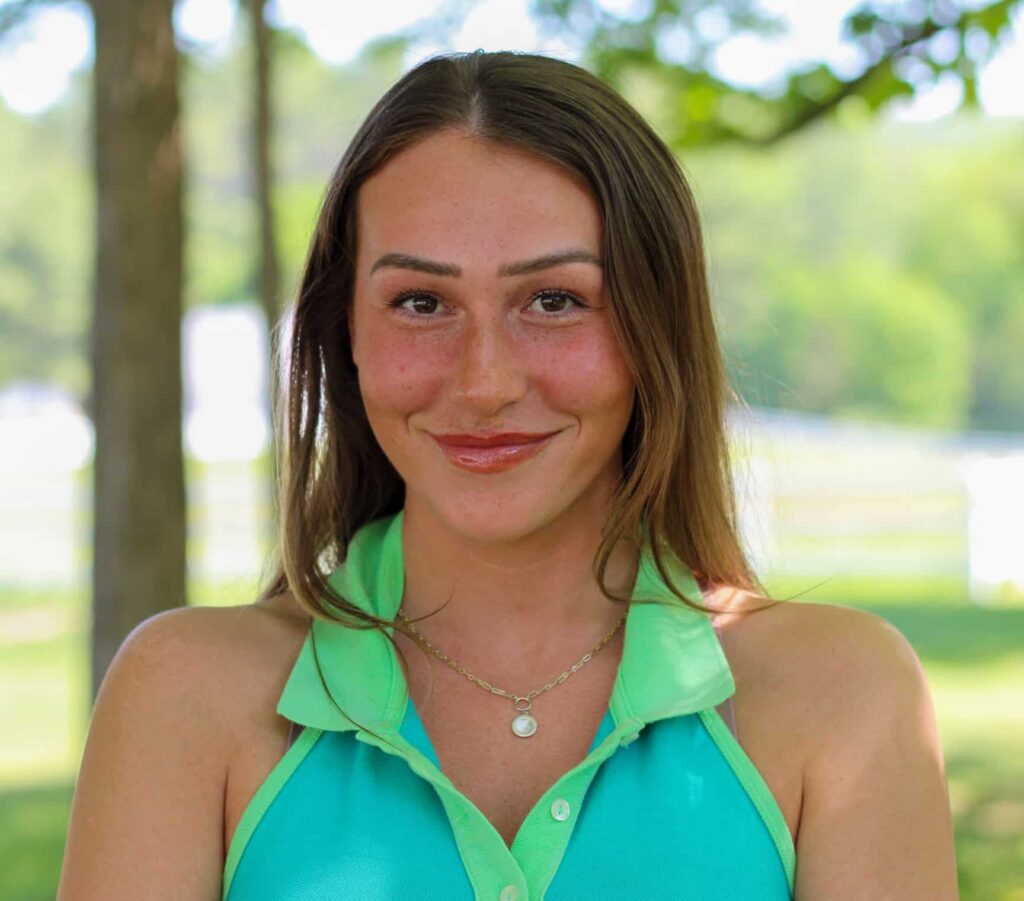
Clinician Katharine Call knows pressure. As a world-class athlete in cross country ski racing, she pushed herself to be the best and frequently came out on top. But that pressure kept her from living a balanced life, so she stepped down from the sport to focus on helping others. Now she uses her experience to help challenge and support her clients—and cheers on her Olympian brother as he continues Vermont’s dominance in the sport.
Tell us about your background?
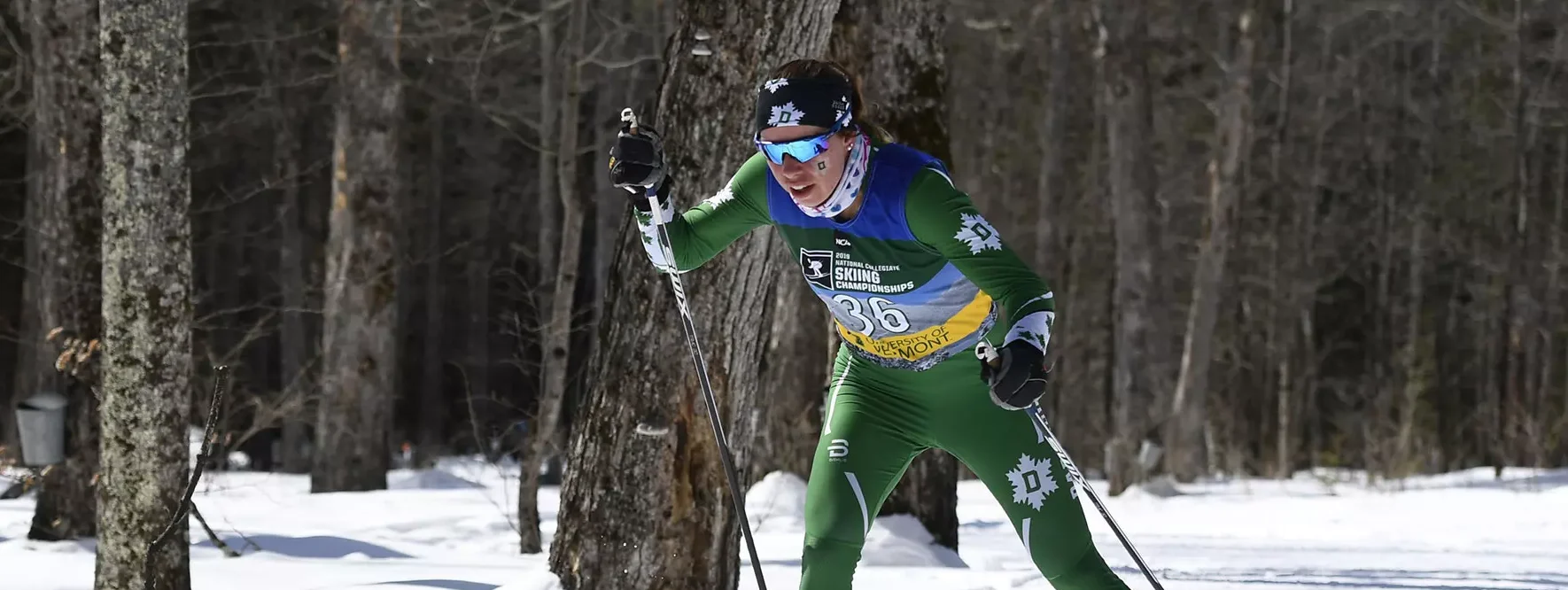
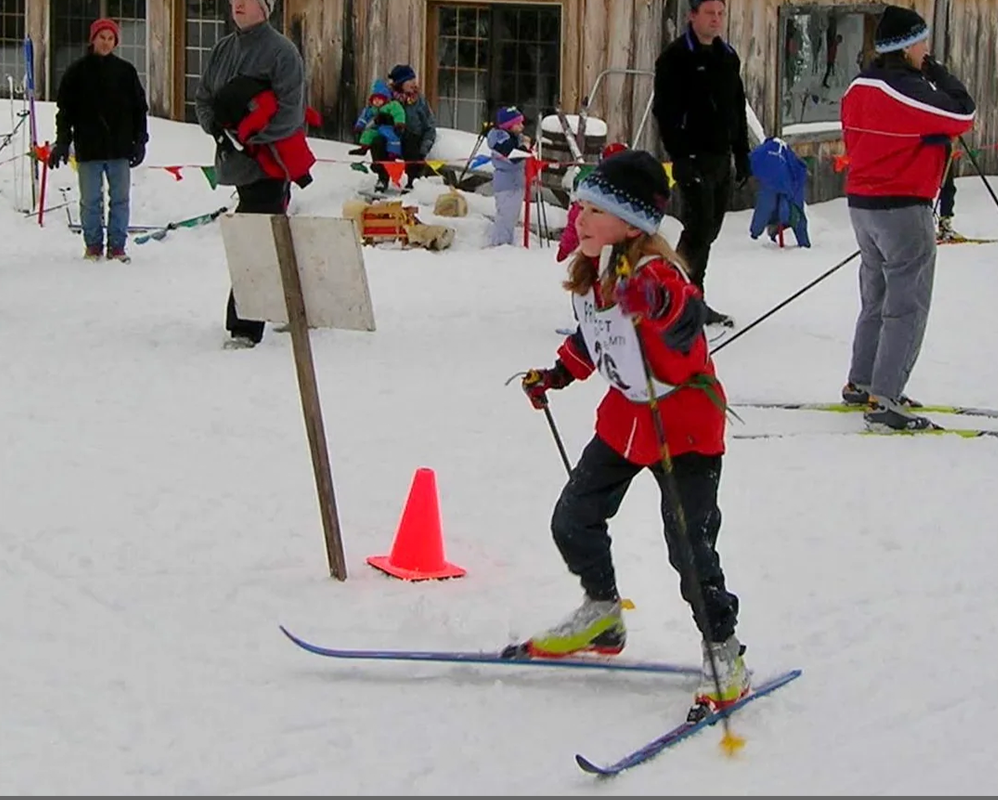
“I grew up in southern Vermont in a town called Landgrove. It is very small—the population is less than 200. I was very focused on ski racing for most of my childhood and I went to Stratton Mountain Academy for high school. I ski raced in college and skied on the U.S. National Team for a bit.
I got into skiing because my dad did, but most people also skied in the area where I lived. Even my babysitter as a kid was on the U.S. National Team for cross country skiing.”
You won three national championships skiing at Dartmouth. What was the best part about that experience?
“I really enjoyed all the college racing. The collegiate circuit is the only one where you’re competing as a team and your scores are adding up so one team wins. It was so special to me, and the team of women I raced with in college was very healthy and supportive.
When I was competing, Dartmouth didn’t have a venue to host the national championships, so the University of Vermont hosted my sophomore year. So many people I knew were there cheering us on. It was great to be there with all the people I love and care about.
Dartmouth can’t give scholarships so we’re generally a bit of an underdog in athletics, compared to schools that can recruit with full-ride scholarships. We didn’t win the team championship, but we came close, and it was special to be working for a crazy huge goal.”
What did you consider for your career outside of ski racing?
“I liked racing and was good at it, but it isn’t a long-term career. I decided to attend Dartmouth and major in psychology. I liked a lot of the classes that were about inequity in the education system and specifically how financial status and poverty affect education and life outcomes.
I wanted to work one-on-one with people, specifically kids who needed it. I decided to go into social work and leave the door open to go into mental health or more of an advocacy space.”
How do you think your background as a high-level athlete helps you in the field of psychology?
“When I started learning more about therapeutic modalities like distress tolerance, it all felt obvious to me. Just doing the thing, basically, I could relate to that. As an athlete there’s a lot of in the moment pain for later gain. Like interval training for example, it’s putting your body in a distressing situation and learning to tolerate it. I think that mentality of working hard was helpful to me.
As an athlete, I also had challenges with anxiety. It was a constant thing where I loved ski racing, but anxiety sometimes got in the way of me enjoying it. I really related to Acceptance and Commitment Therapy (ACT) and the idea of making decisions based on what you value rather than what you’re scared of. I think that was the most important thing for me as I moved forward, really figuring out to prioritize how to make decisions based on what I cared about.
Ultimately that’s why I stopped ski racing. I realized to pursue that career, I had to live a pretty ‘me-centric’ life. It didn’t feel aligned with my values at the time. I wanted to learn and grow, as well as have my friends and family be my number one priority. Rather than worrying about missing training or worrying about getting sick, or whatever else.”
How did you end up at Mountain Valley?
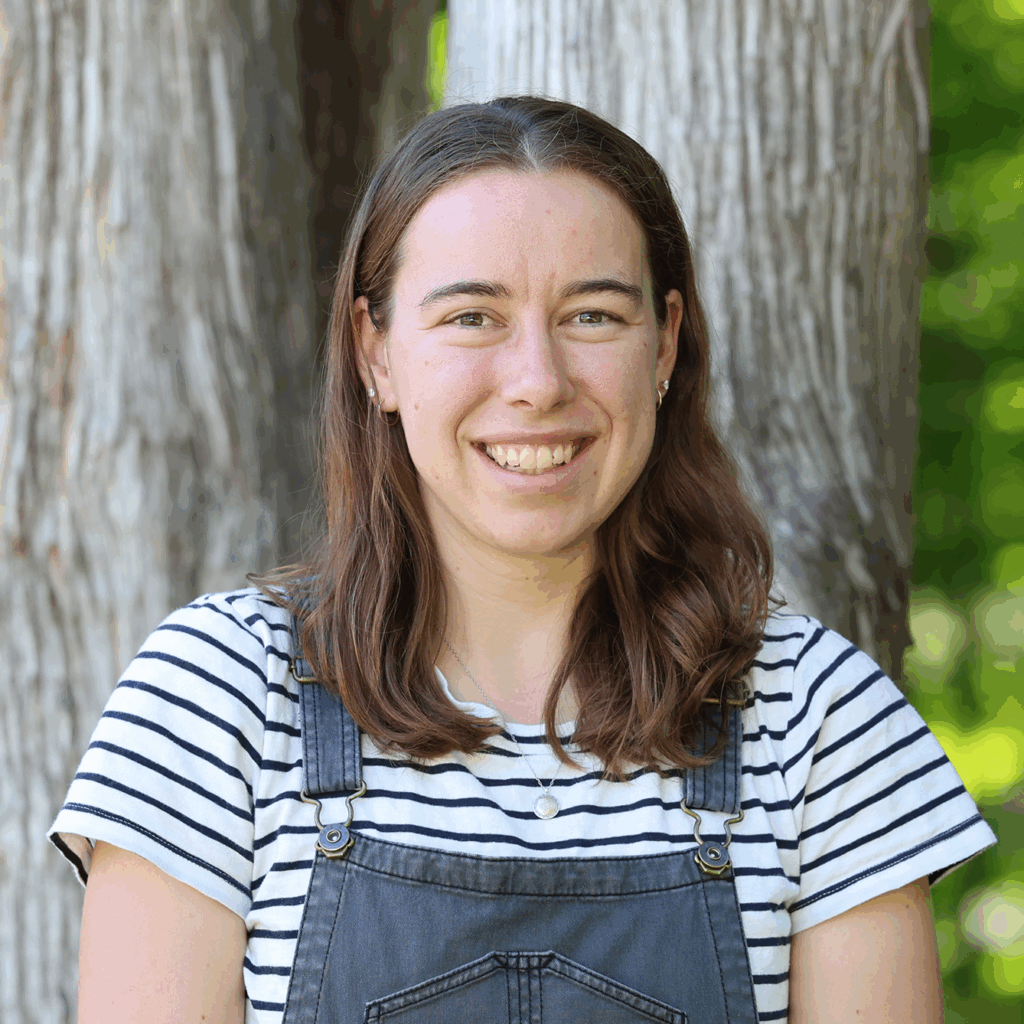
“I came to Mountain Valley literally the week after I got my master’s diploma from Columbia University. During grad school, I got experience working at a non-profit with people who have experienced domestic violence and sexual assault, in an advocate and crisis management role. I also worked at the VA in case management.
As school came to close, I was applying to every job I could find within reason. But I saw the clinician position at Mountain Valley, and it was immediately the one I wanted. I went on their website and saw everything that had possibly been a career interest of mine looped into one place. Adventure therapy, exposure response prevention, the adolescent population, it was so aligned with what I wanted to be doing. In fact, I thought the posting was a scam at first because it sounded so perfect, so I was surprised when Zack responded to me.
I do feel like Zack, Everett and the team took a pretty big chance on me since I didn’t have a lot of work history in mental health. But I think since Zack also completed at the collegiate level, he was able to see how some of my background would be uniquely beneficial in a way that I didn’t even see yet.”
Tell me about your work in Exposure-Response Prevention?
“With my personal experience doing ERP around my own anxiety, I have a lot of empathy for how difficult it is. I’m a strong believe in challenge by choice and I want to make sure the kids get to choose their exposures. It’s a highlight of my job.
One example that stands out is a client I had with severe contamination OCD. She was willing to do the exposures but would beat herself up after the fact. Like “Well if I was normal, this wouldn’t have even been an exposure.” She struggled to celebrate the fact that she was doing something hard.
For her ordeal we decided on a series of three different very challenging OCD exposures. We had all the community come cheer her on, chanting her name and clapping. I was bumping music and playing “This Girl is On Fire.”
For her first exposure she picked a strawberry up off the tennis court and ate it. Then she threw away all her soap, hand sanitizer and Lysol wipes while everyone cheered goodbye. Finally, we rolled out the compost bin, and she plunged both hands into it!
It was iconic, everyone went wild. I was sobbing and it was such a memorable day.”
Back to skiing for one more question. Your brother, Ben Ogden, recently won two silver medals for Team USA at the Olympics. What has that experience been like for you?
“I’ve been so stoked. It’s been so fun to see. The coolest part about it, from my perspective, is that when I raced, I really struggled with balancing it and making it healthy. Ben has done that. He is the most selfless person I know, and he doesn’t compromise anything he cares about. I admire it so much.
He has so many people in his life that love him and he makes sure he makes time for all of them. To be able to ski at such a high level and not give up your life, it gives me goosebumps to even talk about.”