

When most people think of obsessive-compulsive disorder (OCD), they picture someone who washes their hands repeatedly, checks that doors are locked, or needs everything arranged in a particular order.
Those can certainly be symptoms of OCD, but they represent only a small part of a much more complicated disorder.
In teenagers, OCD often looks quite different. It can present as perfectionism, excessive worry, indecisiveness, reassurance seeking, or avoidance. Sometimes the compulsions aren’t visible at all, taking place entirely in the teenager’s mind.
As a result, OCD can go unrecognized for years, even when a teenager is struggling significantly. Parents may see the behaviors without understanding what’s driving them, and the symptoms can sometimes be mistaken for generalized anxiety, social anxiety, depression, or other conditions.
Here are seven signs of OCD that parents may not immediately recognize.
1. Constantly Asking for Reassurance
It’s perfectly normal for teenagers to seek reassurance from their parents. But when a teenager repeatedly asks the same questions, even after receiving an answer, something else may be happening.
A teenager with OCD might repeatedly ask whether they’ve done something wrong, whether their parents are upset with them, or whether something bad is going to happen.
The questions themselves aren’t necessarily unusual. What’s important is the pattern.
When reassurance seeking becomes a compulsion, an answer may provide temporary relief, but the doubt soon returns. The teenager feels compelled to ask again, sometimes repeatedly, until they feel certain.
Parents naturally want to reassure their children. Unfortunately, when reassurance is functioning as a compulsion, repeatedly providing it can reinforce the very anxiety they’re trying to alleviate.
2. Spending Hours on Homework That Should Take Much Less Time
There’s nothing inherently wrong with being a perfectionist, and many successful students have high standards for themselves.
But there’s a difference between wanting to produce excellent work and feeling unable to move forward because something doesn’t feel right.
A teenager with OCD might rewrite the same sentence repeatedly, erase and redo math problems despite having the correct answers, or spend hours checking assignments for mistakes.
In some cases, the concern is about making an error or receiving a poor grade. In others, there’s no specific feared consequence. The work simply doesn’t feel finished or “just right.”
The result can be significant academic impairment, even for a bright and highly capable student. Homework takes hours, assignments aren’t submitted, and school itself may become increasingly difficult to manage.
3. Replaying Conversations Over and Over
Most teenagers worry about what other people think of them. It’s a normal part of adolescence.
But some teenagers spend an extraordinary amount of time mentally reviewing conversations and interactions, trying to determine whether they said something wrong, offended someone, or behaved inappropriately.
This can be particularly difficult to recognize because the compulsions are internal.
A teenager might replay a conversation dozens of times, examining individual words or expressions in an effort to establish certainty about what happened. The reviewing may provide temporary relief, only for another doubt to emerge.
This kind of rumination can also occur with social anxiety and other disorders. What makes it potentially OCD-related is the repetitive, compulsive effort to resolve an obsession or eliminate uncertainty.
4. Repeatedly Confessing or Apologizing
Some teenagers with OCD feel compelled to confess things they’ve done, said, or even thought.
They may repeatedly apologize for minor mistakes, bring up incidents that occurred years earlier, or feel an overwhelming need to disclose thoughts they consider inappropriate.
In some cases, these behaviors are associated with scrupulosity, a presentation of OCD involving obsessive concerns about morality, ethics, or religion.
For example, a teenager might become preoccupied with whether they’re a good person and feel compelled to confess every perceived wrongdoing to obtain reassurance.
What’s often confusing for parents is that the teenager may recognize that the confession or apology is unnecessary but still feel unable to resist the urge.
The confession briefly relieves the anxiety, but the underlying doubt remains.
5. Avoiding People, Places, or Activities for Reasons That Don’t Make Sense to Others
Avoidance is a hallmark of anxiety, and OCD is no exception.
A teenager might begin avoiding particular classes, activities, friends, objects, or situations because they trigger obsessive thoughts.
For example, a teenager experiencing unwanted thoughts about accidentally harming someone might avoid certain household objects or situations, even though they have no desire to hurt anyone.
Another teenager might avoid a social gathering because they’re afraid of having an inappropriate thought or saying something offensive.
Parents may see the avoidance but have no idea what’s behind it. Their teenager may be embarrassed by the thoughts or afraid to disclose them.
And because avoidance reduces anxiety in the short term, it can become increasingly difficult for the teenager to face the situations they’re avoiding.
6. Becoming Extremely Upset When Things Aren’t Done a Certain Way
Many teenagers have particular preferences about routines, schedules, or how things should be organized. That doesn’t necessarily mean they have OCD.
But when a teenager feels compelled to perform certain actions in a particular way, and experiences significant distress when prevented from doing so, OCD may be worth considering.
They might need to repeat a bedtime routine, touch an object a certain number of times, or perform ordinary activities in a particular sequence.
Sometimes these rituals are connected to a specific fear, such as believing something terrible might happen if the routine isn’t completed. Other times, they’re driven by an uncomfortable sense that something is incomplete or not quite right.
Parents may interpret the resulting frustration or anger as oppositional behavior. But what looks like defiance may actually be a teenager struggling with intense anxiety or discomfort.
Of course, rigidity and difficulty with transitions can have many causes, including autism and other anxiety disorders. Understanding why the behavior is occurring is essential.
7. Experiencing Disturbing Thoughts They’re Afraid to Tell Anyone About
Perhaps the least understood aspect of OCD is the presence of unwanted intrusive thoughts.
These can involve violence, sexuality, religion, morality, or other subjects that the teenager finds frightening, shameful, or inconsistent with their values.
A teenager might experience an unwanted thought about harming someone they love and become terrified that having the thought means they’re dangerous. Or they may have an intrusive sexual or religious thought that causes them to question their character or beliefs.
It’s important to understand that having an unwanted intrusive thought does not mean someone wants to act on it.
In OCD, these thoughts are typically distressing precisely because they’re unwanted. The teenager may spend considerable time trying to suppress the thoughts, analyze their meaning, or reassure themselves that they would never act on them.
Because the content can be so upsetting, teenagers often keep these experiences to themselves.
This is one reason OCD can be particularly difficult to identify. A teenager may appear to be functioning reasonably well while privately struggling with significant distress.
A clinician experienced in assessing OCD can help distinguish intrusive obsessions from other thoughts or experiences that may require a different clinical response.
How Do You Know If It’s OCD or Just Anxiety?
This is where things become complicated.
Many of the behaviors described above can also occur in teenagers who don’t have OCD. Reassurance seeking, perfectionism, avoidance, and excessive worry aren’t exclusive to any one disorder.
What distinguishes OCD is the presence of obsessions and/or compulsions that cause significant distress, consume substantial time, or interfere with everyday functioning.
Obsessions are intrusive, unwanted thoughts, images, or urges. Compulsions are repetitive behaviors or mental acts that a person feels driven to perform, often to reduce distress or prevent something feared from happening.
The relationship between obsessions and compulsions creates what we call the anxiety maintenance cycle.
A distressing thought or feeling triggers anxiety. The teenager responds with a compulsion, ritual, or avoidance behavior, which provides temporary relief. But that relief reinforces the behavior, making it more likely that the teenager will respond the same way the next time the anxiety appears.
Over time, this cycle can become increasingly restrictive.
And importantly, compulsions don’t have to be visible. Mental reviewing, counting, silently repeating phrases, and attempting to neutralize unwanted thoughts can all function as compulsions.
Treating OCD in Teenagers
OCD is treatable, but effective treatment requires understanding the role that avoidance and compulsions play in maintaining the disorder.
The leading evidence-based psychotherapy for OCD is Exposure and Response Prevention (ERP), a specialized form of Cognitive Behavioral Therapy (CBT).
ERP involves gradually and systematically confronting feared situations, thoughts, or uncertainties while resisting the compulsions that would ordinarily follow.
For example, a teenager who repeatedly checks homework might practice submitting an assignment without checking it again. Someone who compulsively seeks reassurance might practice tolerating uncertainty without asking a parent to provide another answer.
The purpose isn’t to make teenagers feel anxious for the sake of feeling anxious. It’s to help them learn that they can experience uncomfortable thoughts and feelings without needing to escape, neutralize, or control them.
This is difficult work, particularly when avoidance and compulsions have become deeply ingrained. But it’s also how teenagers begin to regain the freedom to participate in activities that OCD has taken away from them.
Family involvement is often an important part of treatment. Parents may have spent years accommodating their child’s anxiety by providing reassurance, participating in rituals, or helping them avoid triggering situations. These responses are understandable, but they can unintentionally reinforce OCD.
Learning how to support a teenager without participating in the disorder can make a meaningful difference.
Depending on symptom severity and individual circumstances, treatment may also include medication, particularly selective serotonin reuptake inhibitors (SSRIs).
When Is More Intensive Treatment Necessary?
Many teenagers with OCD respond well to outpatient treatment, particularly when they’re working with a clinician experienced in ERP.
But for some, OCD becomes so disruptive that weekly therapy isn’t enough.
A teenager may be missing substantial amounts of school, withdrawing from friends and activities, spending hours each day engaged in compulsions, or relying heavily on family members to manage everyday tasks.
When OCD significantly interferes with functioning despite appropriate outpatient treatment, it may be time to consider a more intensive level of care.
At Mountain Valley Treatment Center, we provide residential treatment for adolescents and young adults ages 13–20 struggling with anxiety, OCD, and related disorders.
Our treatment model integrates ERP, Acceptance and Commitment Therapy (ACT), and Occupational Therapy (OT), with an emphasis on reducing avoidance, increasing psychological flexibility, and improving functioning.
Residents participate in individual and group therapy within a structured therapeutic environment that provides opportunities to practice new skills throughout the day. Family therapy and parent coaching are also integral parts of treatment.
Not every teenager with OCD needs residential treatment. But when symptoms have become severely disruptive, or progress in a less intensive setting has been limited, a comprehensive assessment can help determine the most appropriate next step.
If you’re concerned that your teenager may be struggling with OCD, particularly if their symptoms are interfering with school, relationships, or everyday life, we encourage you to seek an assessment from a clinician experienced in treating pediatric OCD.







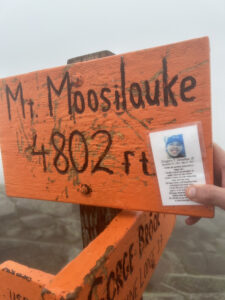 As I sit here and write this on May 26, 2026, nine years after my buddy’s passing, I am putting written words to the memory of this day for the first time. Each year, when this anniversary comes up, I try to lean into the emotion that this day holds and do something in his memory to make meaning of his passing.