MOVING MOUNTAINS

Resources

Staff Spotlight: Katharine Call

From Podiums to Psychology 

Clinician Katharine Call knows pressure. As a world-class athlete in cross country ski racing, she pushed herself to be the best and frequently came out on top. But that pressure kept her from living a balanced life, so she stepped down from the sport to focus on helping others. Now she uses her experience to help challenge and support her clients—and cheers on her Olympian brother as he continues Vermont’s dominance in the sport.

Tell us about your background?

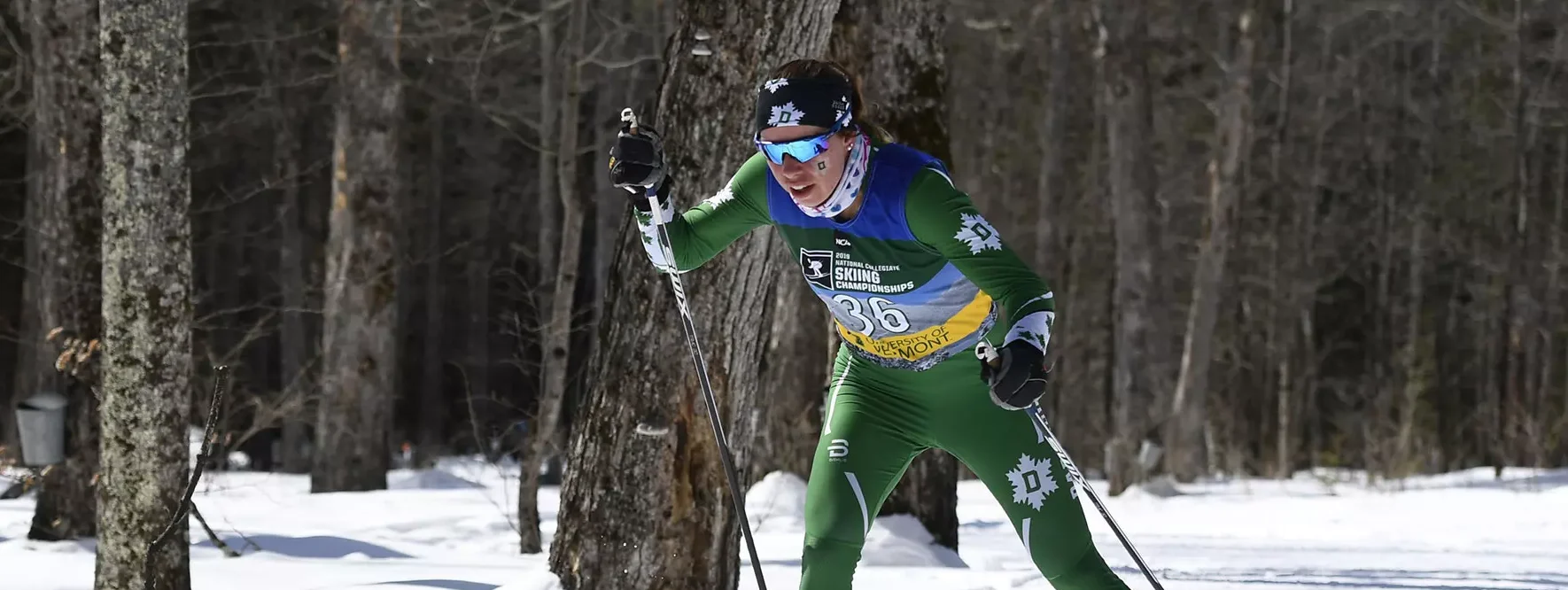
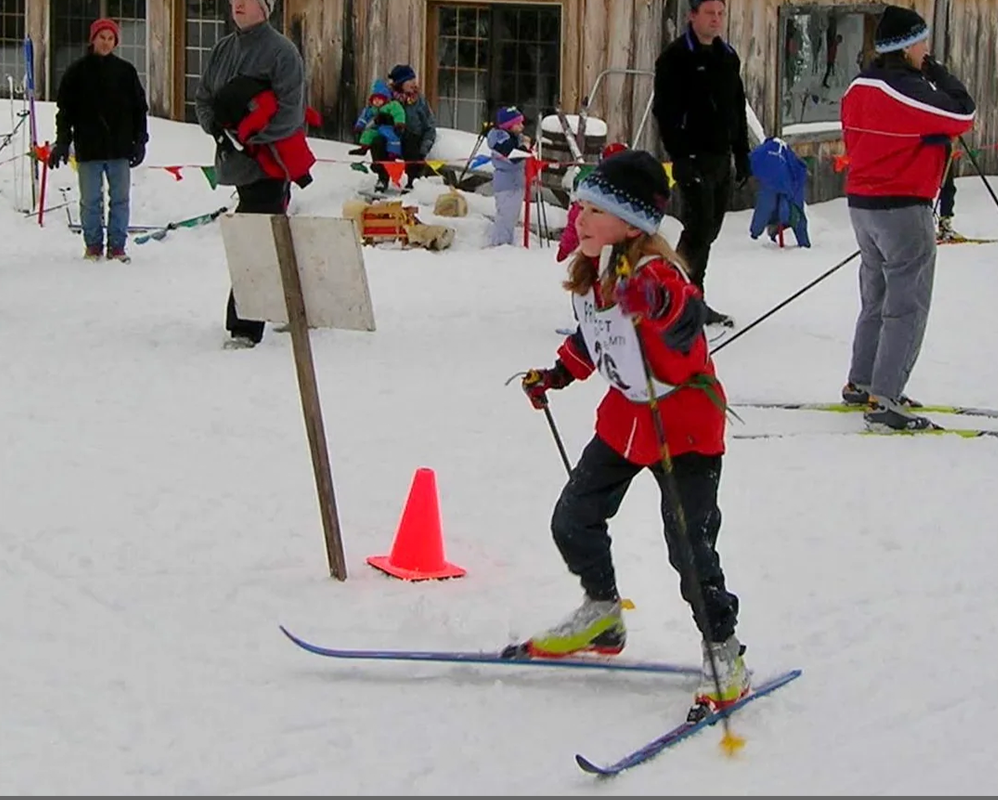
“I grew up in southern Vermont in a town called Landgrove. It is very small—the population is less than 200. I was very focused on ski racing for most of my childhood and I went to Stratton Mountain Academy for high school. I ski raced in college and skied on the U.S. National Team for a bit.

I got into skiing because my dad did, but most people also skied in the area where I lived. Even my babysitter as a kid was on the U.S. National Team for cross country skiing.”
Katharine Skiing

 You won three national championships skiing at Dartmouth. What was the best part about that experience?

“I really enjoyed all the college racing. The collegiate circuit is the only one where you’re competing as a team and your scores are adding up so one team wins. It was so special to me, and the team of women I raced with in college was very healthy and supportive.

When I was competing, Dartmouth didn’t have a venue to host the national championships, so the University of Vermont hosted my sophomore year. So many people I knew were there cheering us on. It was great to be there with all the people I love and care about.

Dartmouth can’t give scholarships so we’re generally a bit of an underdog in athletics, compared to schools that can recruit with full-ride scholarships. We didn’t win the team championship, but we came close, and it was special to be working for a crazy huge goal.”

What did you consider for your career outside of ski racing?

“I liked racing and was good at it, but it isn’t a long-term career. I decided to attend Dartmouth and major in psychology. I liked a lot of the classes that were about inequity in the education system and specifically how financial status and poverty affect education and life outcomes.

I wanted to work one-on-one with people, specifically kids who needed it. I decided to go into social work and leave the door open to go into mental health or more of an advocacy space.”

How do you think your background as a high-level athlete helps you in the field of psychology?

“When I started learning more about therapeutic modalities like distress tolerance, it all felt obvious to me. Just doing the thing, basically, I could relate to that. As an athlete there’s a lot of in the moment pain for later gain. Like interval training for example, it’s putting your body in a distressing situation and learning to tolerate it. I think that mentality of working hard was helpful to me.

As an athlete, I also had challenges with anxiety. It was a constant thing where I loved ski racing, but anxiety sometimes got in the way of me enjoying it. I really related to Acceptance and Commitment Therapy (ACT) and the idea of making decisions based on what you value rather than what you’re scared of. I think that was the most important thing for me as I moved forward, really figuring out to prioritize how to make decisions based on what I cared about.

Ultimately that’s why I stopped ski racing. I realized to pursue that career, I had to live a pretty ‘me-centric’ life. It didn’t feel aligned with my values at the time. I wanted to learn and grow, as well as have my friends and family be my number one priority. Rather than worrying about missing training or worrying about getting sick, or whatever else.”
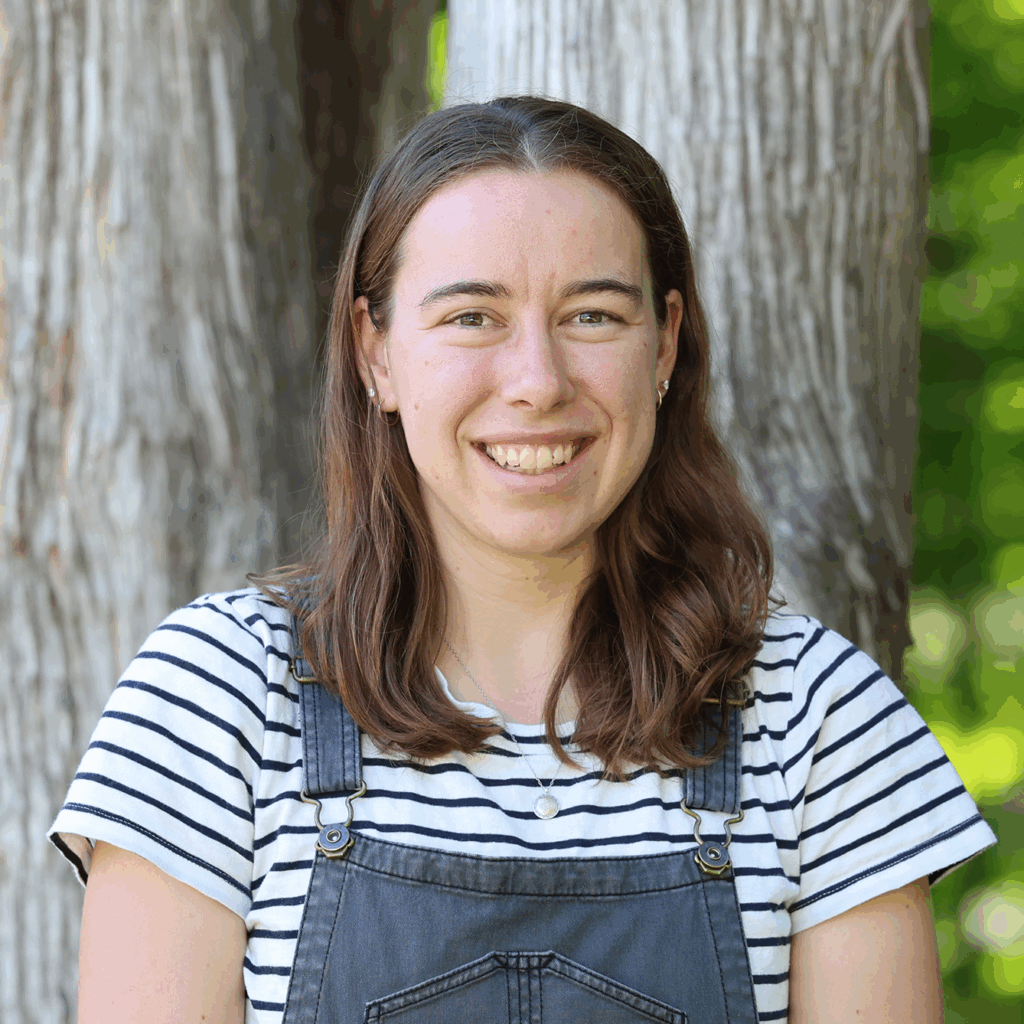
Katharine Call

How did you end up at Mountain Valley?

“I came to Mountain Valley literally the week after I got my master’s diploma from Columbia University. During grad school, I got experience working at a non-profit with people who have experienced domestic violence and sexual assault, in an advocate and crisis management role. I also worked at the VA in case management.

As school came to close, I was applying to every job I could find within reason. But I saw the clinician position at Mountain Valley, and it was immediately the one I wanted. I went on their website and saw everything that had possibly been a career interest of mine looped into one place. Adventure therapy, exposure response prevention, the adolescent population, it was so aligned with what I wanted to be doing. In fact, I thought the posting was a scam at first because it sounded so perfect, so I was surprised when Zack responded to me.

I do feel like Zack, Everett and the team took a pretty big chance on me since I didn’t have a lot of work history in mental health. But I think since Zack also completed at the collegiate level, he was able to see how some of my background would be uniquely beneficial in a way that I didn’t even see yet.”

Tell me about your work in Exposure-Response Prevention?

“With my personal experience doing ERP around my own anxiety, I have a lot of empathy for how difficult it is. I’m a strong believe in challenge by choice and I want to make sure the kids get to choose their exposures. It’s a highlight of my job.

One example that stands out is a client I had with severe contamination OCD. She was willing to do the exposures but would beat herself up after the fact. Like “Well if I was normal, this wouldn’t have even been an exposure.” She struggled to celebrate the fact that she was doing something hard.

For her ordeal we decided on a series of three different very challenging OCD exposures. We had all the community come cheer her on, chanting her name and clapping. I was bumping music and playing “This Girl is On Fire.”

For her first exposure she picked a strawberry up off the tennis court and ate it. Then she threw away all her soap, hand sanitizer and Lysol wipes while everyone cheered goodbye. Finally, we rolled out the compost bin, and she plunged both hands into it!

It was iconic, everyone went wild. I was sobbing and it was such a memorable day.”

Back to skiing for one more question. Your brother, Ben Ogden, recently won two silver medals for Team USA at the Olympics. What has that experience been like for you?

“I’ve been so stoked. It’s been so fun to see. The coolest part about it, from my perspective, is that when I raced, I really struggled with balancing it and making it healthy. Ben has done that. He is the most selfless person I know, and he doesn’t compromise anything he cares about. I admire it so much.

He has so many people in his life that love him and he makes sure he makes time for all of them. To be able to ski at such a high level and not give up your life, it gives me goosebumps to even talk about.”
MOVING MOUNTAINS

Resources

Staff Spotlight: Kate Sheldrick

No Place Like Home 

At Mountain Valley, residential counselors are immersed in the life of milieu, serving as safe, reliable figures for our residents as they navigate each day of programming. Kate Sheldrick brings a calming presence and years of experience to the team, and she brings plenty of local knowledge as an Upper Valley native. After considering careers in education and nursing, Kate’s currently focused on pursuing a degree in mental health and finds joy in helping residents on their journeys.

Tell us about your background?

“I’m from Quechee, Vermont and grew up in the area. I did leave the Upper Valley for a bit to do van life in Hawaii with my partner at the time. It was cool short-term to experience the culture, but I came back after a few months.

My mom had an at-home daycare, so I’ve been around kids my whole life. When I came back home, I worked at another daycare and started to do some early childhood education courses at a local community college. Then COVID happened and I’d decided to pursue pre-requisites for a nursing degree. I needed a job while I did that, so I applied as an overnight residential counselor at Mountain Valley.”

What made you decide to stay at Mountain Valley?  

“I ended up learning a lot about my own mental health in the process of working overnights. It made me realize that nursing wasn’t where I wanted to go exactly. The mental health field piqued my interest. I’m not great at choosing a career path, but I’m definitely focused on a something in psychology or social work—continuing to give back to my community.”

What does a typical day look like for you?

“I help facilitate club time, and we try to get the residents’ input on what type of clubs they like so they can look forward to it. We offer everything from slime club, to craft club, to improv. The most popular club is board game club, and I think games are great for starting interactions. It’s one of the easiest ways to break the ice with a new resident or people sitting outside the group. Residents get really into it and it’s fun to be competitive in a healthy sense. My favorites are Scattegories and Bananagrams.

I also facilitate stewardship, which could be working on the farm, in the kitchen, or organizing the common areas. I’ll eat dinner with the residents and make sure they’re on top of their laundry and medications. Before bed they have free time, and that’s when I really connect with residents on the mental health side. I get their objectives and help them process the day—it can be tough, so I want to support them.”

What’s the most rewarding part of the job for you?

“I love the residents and seeing them grow in their mental health and as a person, hearing their stories and opinions, and learning their different ways of life. It’s very fulfilling when one of the kids just tells you how much you’ve been able to help them, even if you feel like you’ve not necessarily succeeded in every way.”

What’s your perspective on the Upper Valley as a local?

“I always get the question of why I’m still here, and I enjoy that it’s a safe, family type environment. Most of our kids come from a cities or more populated areas, so I get to offer an insight that there isn’t always stuff to do and boredom is okay. Plus, I’ve got all the restaurants and activities covered for the local visits.”

What do you like to do for fun when you’re not working? 

“I like warmer weather, and in the summer, I like to paddle board in the local lakes or ponds with my pug. Either I’m doing that or hiking. I also like to try new food places outside the area, and I like art. I enjoy crafting, painting, and drawing, so it’s fun to be able to do that with the residents in our clubs.”

What would you say to someone who feels uncertain about joining Mountain Valley?

“I would tell them that it doesn’t hurt to try, and I would remind them that this is something a lot of new residents go through. I can try and be there and process and coach them through it. The people here are supportive and understanding. They’ve been through this already, so I would encourage them to lean on their peers and remind them that they are in a safe space to figure it out. It doesn’t have to feel like the right decision right now.”

MOVING MOUNTAINS

Resources

Staff Spotlight: Antoinette Moody

Turning Anxiety into Mindful Work 

Long Island, New York and Vermont could practically be on different planets. For Antoinette Moody, the switch from the non-stop action of the city to the calm of the country was exactly what she wanted. Mountain Valley’s senior clinician is used to intensity—she previously worked in a prison and community mental health—and she finds her current work to be the most rewarding.

Tell us about your background?

“I am originally from Long Island, and growing up there was a lot, it was kind of a pressure cooker. It was a pressure cooker because there were so many kids, I graduated with like 1,200 in my class. You had to be the best at something to be acknowledged. And you definitely don’t know everyone, you’re going to school with strangers.

As I got older, I realized I really didn’t like the city life anymore, so I went to Castleton State College in Vermont for undergrad. I did my master’s degree back in the city at Adelphi University, but I left again for Vermont in 2011 and have been here ever since.

I like the slower pace of things, though at first to be honest, it really annoyed me. I thought people were too slow, but I like the mindfulness of it all, and it causes me less anxiety. I was always interested in raising a family where it was homier feeling.”

Antoinette Moody

What made you interested in becoming a therapist?

“I certainly was a very anxious kid—I was always worried about change and what we were doing. When things were moving so fast it felt unmanageable. My dad also died when I was a teen and that early trauma caused me to want to be a therapist and support others in similar situations.

I wanted to understand what made people do the things that they did. Today I understand that it’s nature and nurture, some people are born wired up a little differently. You throw on some trauma and invalidation, and it can make a neurotic individual.”

Where did you work before you came to MV and how did it prepare you for the work you do today?

“Right out of grad school I took a job working in a prison with sex offenders. That was something else. We did a lot of Cognitive Behavioral Therapy to try and help people not re-offend, and I worked with people who had moderate risk. I did enjoy the work, but I didn’t like working in a prison.

After that I worked in community mental health for about seven years. I was the team leader for the therapy team. We worked with people with borderline personality disorder and trauma, and I personally managed a lot of clients. That job got to be a lot, so I moved to Dartmouth Health and worked in the inpatient psych unit as a therapist before taking the job at Mountain Valley.

I learned a lot, especially about dialectics. In community mental health I primarily used Dialectical Behavior Therapy, and it gave me a good foundation. I love a good coping skill. My work spanned people who had hurt others to the people who were really hurt. But it was hard to work with severe and persistent mental illness and not see clients get better.

I wanted to make an earlier impact and that’s what drove me to Mountain Valley. I thought it would be interesting to work with adolescents while the brain is still developing. Could therapy make a difference? In fact, we do make a significant different, so that’s amazing.”

How do you feel about your current work at MV?

“This is the most rewarding job I’ve had and it’s also the hardest. The hardest part is that OCD at face value doesn’t make any sense, but it’s so debilitating. It’s hard to see young and vibrant people be so eaten up from their OCD. Our work is to try and unhook them from what’s keeping them safe, and we have to go very slowly. It’s very emotional.

The most rewarding part is making an impact on someone’s life early enough, then getting to see them live a beautiful life. Some of my clients still stay in touch with me and it’s incredible to get their updates.”

Do you have any examples of particularly rewarding work with residents?

“When I first started at Mountain Valley, I worked with a young woman with social anxiety and OCD. She would lie as a compulsion because she had a fear of being judged. If she never showed her true self and lied, then everyone judging her wouldn’t be judging her true self. During one session, she told me some of the lies she engaged in, and I remember she was so ashamed and down on herself about it. I wasn’t judging her at all though—I thought it made sense, and I felt it so deeply.

After that session she started to do the exposure work of being her true self in the community. She was able to play violin at her graduation as a last exposure. Up to that point she hadn’t played because she was afraid of people’s judgment. There’s something powerful about someone telling you, ‘I’ve never been my true self,’ and then you get to see the side that no one else has seen. It’s incredibly rewarding.”

You’re also a parent now, what is that like?

“It’s the hardest thing I’ve ever done—look at me doing exposures! I try to practice what I preach in all my years of working as a therapist. Now that I’m a mom, there’s no choice. I have to sit in that chronic uncertainty, and I try to remember the coaching I do with my clients.

It’s also kind of cool because it’s helped me tap into slowing down even more. There’s such a mindfulness. I know I’m only going to have one child, and I don’t want to miss a thing. I like being able to see the world through my son’s eyes. When I was growing up, I didn’t get to be a child for very long, and now I’m able to have that experience again”

MOVING MOUNTAINS

Resources

Staff Spotlight: TJ Baumann

Adventure Is Out There 

TJ Baumann is the Milieu Support Specialist at Mountain Valley, and uses his extensive background in adventure sports and education to help residents develop individually and in community. After years of travel and work across the country, TJ has made a home for himself and his family in New Hampshire. His passion for teaching led him to recently complete a master’s degree in child and adolescent developmental psychology at the University of Southern New Hampshire.

Tell us about your background?

I grew up in New Jersey. I wasn’t allowed in the house when I was a kid because I was a little rambunctious (laughter). I struggled in school because I would do what I was told, but it was never stimulating enough for me to lean in and lock in. I was smart but I didn’t really care. But I ended up making it through high school and spent the next 12 years living a bit of a vagrant lifestyle. I taught hang gliding and skiing all over the country, and I opened my own hang gliding school at one point in Utah. This is going to sound corny, but it taught me how to live. Growing up I was a kid who did what he was told but was never happy with the baseline of other people.

Through this process I had some great mentors who taught me a lot—how to care for myself and others in a healthier way. To take care of myself and use my strange gifts and the odd aspects of my personality for the benefit of others. I had one co-worker, Matt Paulson, who I taught with. His big thing was, “It’s not about you. You’re not the most important factor in this equation. Your role is more to facilitate than be a central figure.” Matt tragically passed away many years ago after a battle with mental health issues, but his message has always stuck with me.

How did you end up at Mountain Valley?

 I ended up back in New Hampshire to get my bachelor’s degree in adventure education at Plymouth State University. I took a job at Mount Prospect Academy—when I started the job, my son had been born two weeks before and I had never done mental health work. I had worked with some challenging individuals, but never to the extent of the kids there with trauma and intense behavioral issues.

I went for it, but it ended up being too much for me. The combination of a new baby at home and a challenging group of kids was not great. When I told my boss I couldn’t do it anymore, they told me there was another company where the clientele was a bit less intense. They referred me to Mountain Valley, and I ended up starting as a residential counselor in June 2018. It clicked because I found a lot of kids who were like my friend Matt. They struggled with similar things, and I realized I could help them and make a difference in their lives.

In 2019 I got a teaching job in Laconia and worked there for about four years. During that time, my wife and I had another child and I also decided to pursue a master’s degree in child and adolescent developmental psychology. Mountain Valley recruited me back and now I’m the milieu support specialist, with a focus on adventure and community development. I also enjoy mentoring and staff training.

Why did you decide to pursue a master’s degree?

Teaching has been a passion of mine for pretty much my whole life. I had my first teaching job in gymnastics when I was 16, and my jobs have had an instruction component ever since. The master’s degree helped me codify my understanding of how people learn and how learning functions. When I was teaching in the private school, I decided I wanted to better understand how kids develop. I have a strong passion for adventure and experiential education and feel like it’s something lacking in our current system. I’d like to expand the reach of that form of education as much as I can.

During my master’s degree program, I taught briefly as a lecturer and loved it. I love drilling down to the deepest reaches of a topic. I enjoy having the deep discussion and the process of discovery—I learn a lot through that process myself. My goal is to teach in a university system again eventually.

What’s most rewarding about working at Mountain Valley?

I love grad days, because it shows how the residents have grown so immensely. I can think of a couple examples of where I’m sitting there on grad day and thinking about the day the resident showed up, and it’s crazy to me the change they’ve made. It’s very rewarding to see the rectification that happens between parents and kids, especially since I’m a dad. Watching parents come to terms with what happened and re-engage with their kids in a healthier way is very meaningful.

Can you give us some examples of resident success stories?

 Three come to mind. One young woman had anxiety and OCD wrapped up in her self worth. She focused constantly on whether she was good or bad, what kind of person she was. The growth that she experienced throughout her time at MV allowed her to finally look in a mirror and say “yeah, that’s me.” She stopped trying to quantify every little action and realized “I am a person, and here I am.” That was huge for me and an immense change for her

We had another young woman with pretty intense autism spectrum disorder and anxiety tied in. She just couldn’t be flexible due to that. But at the end of her time at MV, she could say ‘”Yeah, this has to change in the next 30 seconds without warning,” and then reflect “That was really hard, and it also wasn’t the end of my day, I can improve it from here.” We had a great relationship, and it meant a lot to me when she graduated. It wasn’t easy but it was worth it—she took the help and got it done.

Finally, we had a young man who was so wrapped up in making everything perfect. His OCD was all about having everything just right. If a social interaction didn’t go well, that was the end of the world, because he craved social time above anything else. I heard from him after he graduated, and he was getting ready to lead a group trip and teach about foraging for mushrooms. The community he’s developed sounded like a good fit and what he needed.

What’s the best part about being a dad?

Honestly for me it’s the little stuff. I woke up this morning, the kids jumped in bed with me, and they were stoked to hang out since I didn’t have to jet off to work first thing. It’s restorative to be present with them. When we don’t have to rush to get out the door, it’s nice to take 10 minutes and talk to them about their day and the cool things we’re planning to do this weekend.