MOVING MOUNTAINS

Resources

Alumni Spotlight: John Wyetzner

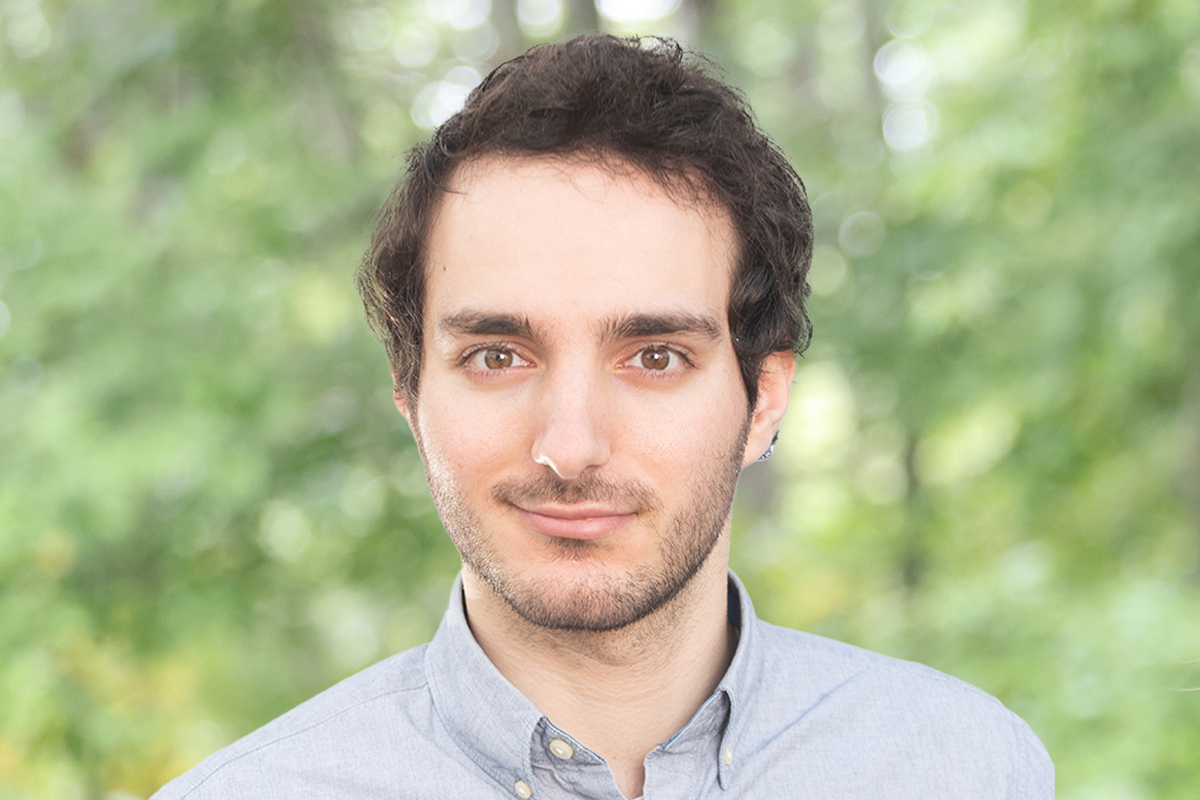
Can anxiety serve as a compass? If you’ve had the Mountain Valley experience, it can. John Wyetzner, LCSW, felt paralyzed by anxious thoughts, but his short time at MV was transformative. Today he’s accumulating expertise as a therapist specializing in OCD treatment, engaged to be married, and using fear as a motivator to make—not avoid—decisions.

John Wyetzner

Tell us about your background and how you came to Mountain Valley?

I grew up in Manhattan in New York City. I had anxiety from an early age, just in general. But as I got older it steadily got worse, never to the point where I couldn’t function, but just a constant part of my life. Eventually I couldn’t go to school. I woke up one morning and it felt too hard to do. That happened for almost a month, waking up, feeling super anxious, and not being able to attend school. I felt depressed and I didn’t know why I couldn’t push through it. It became a cycle—it went on for so long that it felt like it would be super weird for me to return, and it just compounded.

I had been in therapy, mostly talk with some CBT and ERP, but nothing super intense. At that point, it was clearly not enough, and I needed a higher level of care. It was 2012 and my parents found Mountain Valley, which was still a new program. It took a lot of convincing for me to go, because I didn’t think it would help. Eventually I realized I had nothing else going on and I should give it a try.

I remember the night we drove up, and I was terrified. But the next day I looked around, and it felt welcoming and warm, which was a new experience for me. I decided to try it out. It was my first time being around other people who had anxiety and felt comfortable talking about it. It was very reassuring to me to not have to hide it.

What was your biggest fear and how did you work through it?

I really worried about being anxious in front of others in public and not feeling like I had a safe place to retreat. My anxiety was often somatic, and it would show up as nausea. I would throw up sometimes and that made me feel very anxious. A lot of my exposure work centered around having a stomachache and what it would feel like to throw up. We also did a lot of social exposures, which included talking to new people and strangers.

Once I was there, I felt super motivated to put in the work. I turned the corner because I was around people who made me feel comfortable with vulnerability. I spent most of my time with eight other residents, which was certainly a big change from the city but also comforting. It was also helpful for me to get outside and get fresh air, even though I attended during the winter, it was good to just walk around campus to the different buildings.

What did life look like after Mountain Valley?

The plan was for me to return home and go back to school, but we decided that therapeutic boarding school would be a better fit. I managed my anxiety and was able to go to college after that. Since mental health had been such a big part of my life, I decided to major in social work. College went well and I didn’t have any big concerns, which was a nice change. After college, I went on to graduate school and got my MSW so I could work as a therapist.

How did you end up in your current practice setting?

Based on my own experience, I knew I wanted to specialize in OCD work. After a few years I got my higher-level license, and I wanted to move back to the city. I found the Child Mind Institute, and it was a perfect fit. We do a lot of outpatient sessions, parent work, and collaborating with other clinicians and schools. We also run an OCD intensive program.

I think I understand the issues well because I’ve been through them myself. It helps me understand my clients’ mindset and connect with them. If sharing my story feels appropriate, I’m happy to do that and talk about how I went through a similar journey but came out on the other side.

I think our exposure work is powerful because OCD is the disease of doubt. You get so stuck in your head problem solving that you’re on a mental treadmill. Exposure gets you out of that headspace by challenging you to test your thoughts. Once you do that, you see that what you thought would happen is often wrong and that OCD is lying to you.

Tell us about a success story you’ve had with a client?

One of my clients had OCD centered on perfectionism, especially getting good grades. She had a hard time turning in work if it wasn’t perfect, and she would catastrophize. We spent a lot of time talking about her feared outcomes and how they felt bad, but we didn’t know that they would happen for sure. And if they did happen, maybe they wouldn’t be as bad as she thought. For an exposure I gave her a short, timed writing assignment. She didn’t like doing it, but it was helpful. She saw that she could make a mistake and that it was still okay—she didn’t have to listen to that part of her brain.

How has your life changed since you attended Mountain Valley?

My time at MV heavily influenced who I am today. In my career, I want to continue helping clients and the public better understand OCD. The media and society tend to misrepresent it as simply a hyperfocus on cleanliness or symmetry. It’s so much more complicated than that, so let’s normalize the other ways it presents.

I got engaged recently which has been great, I’m starting to think about our future together. It’s exciting and nerve-wracking. But I’m so much better equipped to deal with my anxiety today. When I notice I feel anxious about something, like attending a party, that feeling tells me I should do it and that it will be a good exposure for me. It’s a good compass for me, even though I don’t always enjoy pushing through. But 95% of the time, it turns out better than I expected. Once I show up that anxiety almost always goes away.
MOVING MOUNTAINS

Resources

Alumni Spotlight: Sara Fairbank

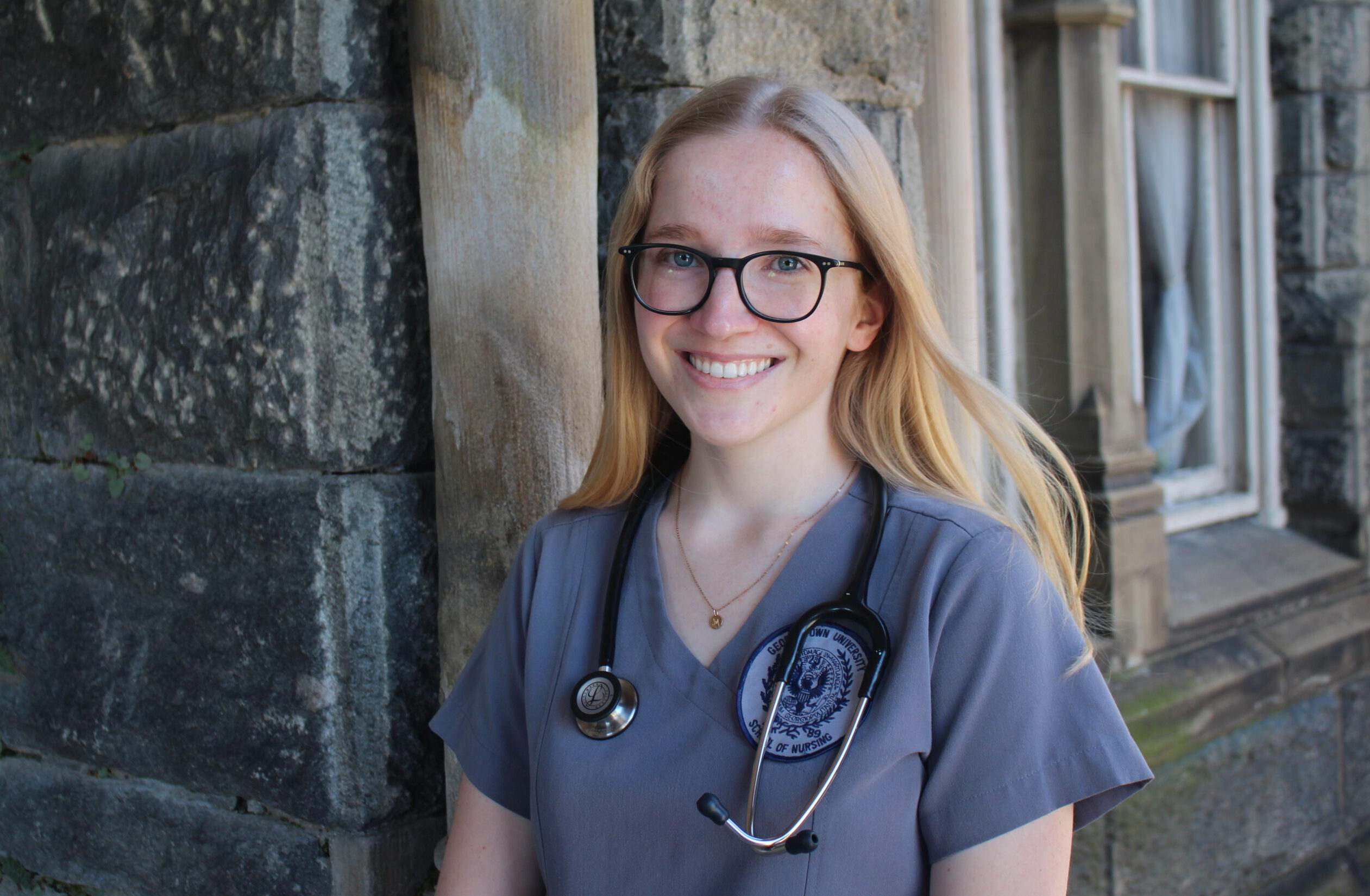
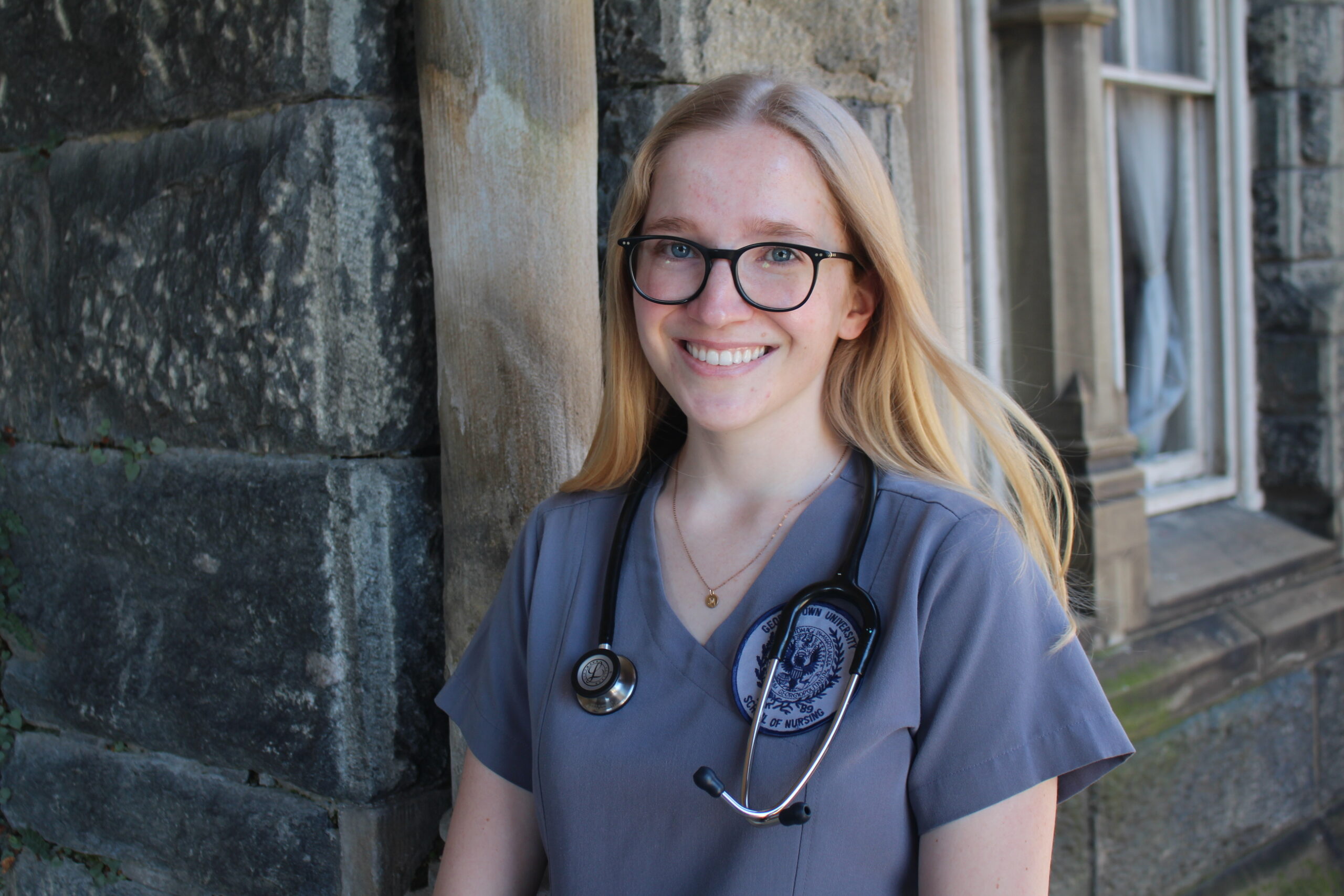
Sara Fairbank is from McLean, Virginia and attended the Potomac School before joining Mountain Valley in 2019. After successfully completing the program, she enrolled at Georgetown University and completed a degree in nursing. Today she’s a registered nurse serving the D.C. area, with plans to pursue a graduate degree and make an even bigger impact in the field.

Sara Fairbank

What brought you to Mountain Valley?

I’ve always had anxiety, but my last year of high school I became pretty depressed, and my anxiety was much harder to manage. I finished out the school year but then immediately enrolled at Mountain Valley. I had a good experience—of course it was tough, but I was growing a lot and learning a lot more about my anxiety. I 100% think it was the best thing for me.

I think I challenged myself to grow, even though it was difficult to make it through and come out the other side. I had to use my new coping skills in an environment that caused me so much anxiety before. The relationships I made at Mountain Valley were very valuable and it was a great program for me.

What are you doing today? 

I’m a clinical nurse at MedStar Georgetown University Hospital. During nursing school, I started working there as a student nurse technician and I’ve been with them ever since. Today I’m on the adult medical intermediate care floor, we see pretty much everything with adult patients but it’s one step below the ICU.

I’ve always loved science, but I also love working with people. Compared to physicians in the hospital setting, I get much more time with my patients. On my floor I work with three or four patients a day, and I get to have a personal connection with them.

Tell us about a memorable connection you’ve made with a patient? 

When I was still on orientation, we had one relatively stable patient. We were fully staffed and had extra time that day to talk. He shared with us that he’s an artist and loved drawing. To thank us for everything we did he drew me a cartoon of Spiderman that says, “Thank you Sara.” It’s a physical reminder of the impact I have, so I definitely want to frame it.

How do you think Mountain Valley made a difference in your life? 

Mountain Valley gave me the tools to advocate for myself in a very important way. I had a lot of anxiety in nursing school, and while my time at Mountain Valley didn’t reduce my anxiety, it gave me the tools to work with it. I was able to communicate my needs with my professors to help me complete nursing school successfully, which was essential since I started during the pandemic.

What are your future goals? 

I’ve thought about becoming a nurse practitioner, but I think I’d really like to pursue teaching. I might go back and get my master’s in nursing education. I promised myself when I entered healthcare that I’d be relatively open with my patients, using therapeutic communication and relating to their experiences with anxiety. I’d love to get more involved as an alum with Mountain Valley and volunteer more of my time—my experience there was transformational.

MOVING MOUNTAINS

Resources

Alumni Spotlight: Amelia Teta

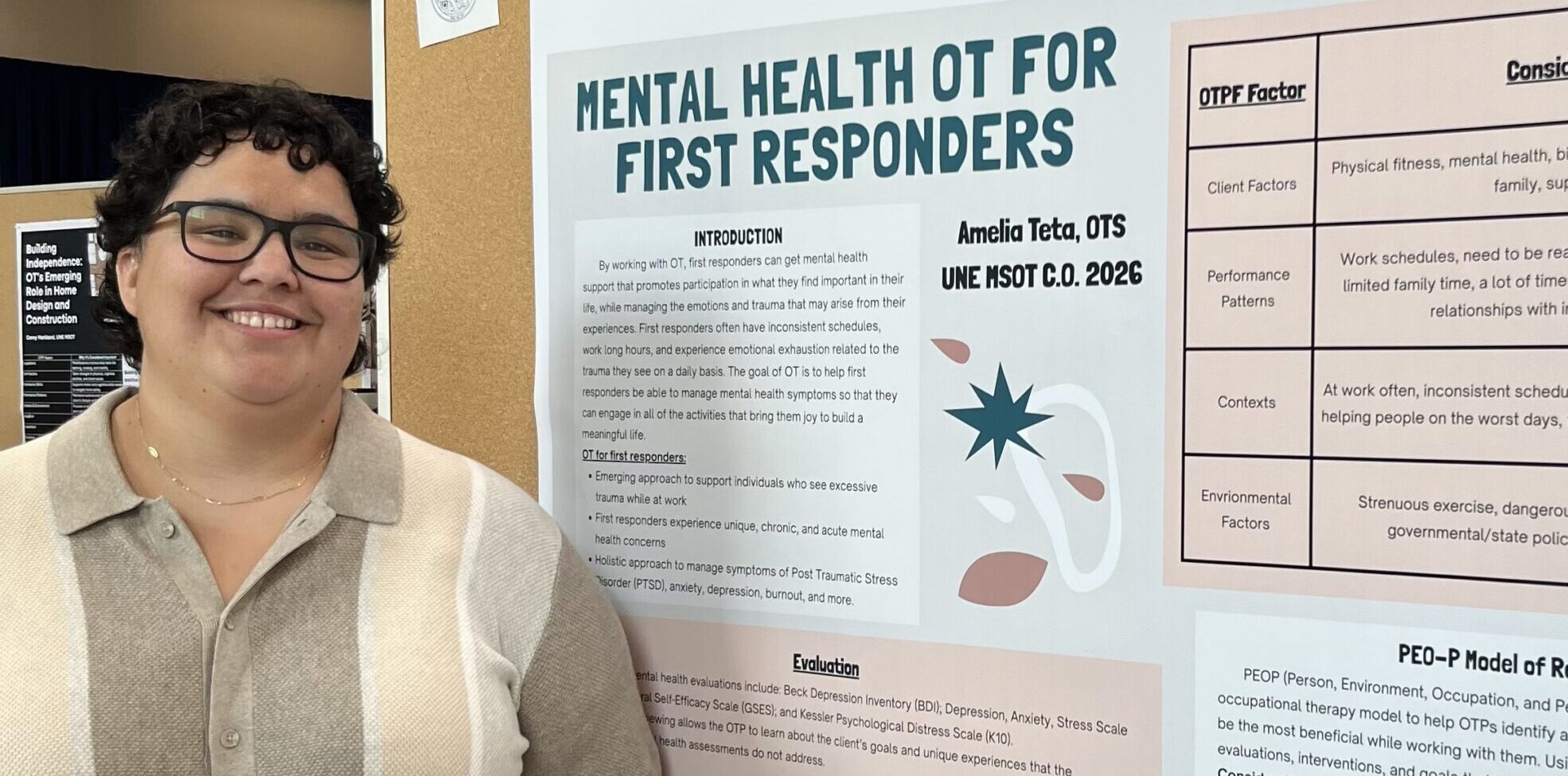
Amelia Teta is from Boston and attended Mountain Valley in 2017. Teta was an active student-athlete at the rigorous Boston Latin School before suffering two concussions. After that, she struggled with anxiety and depression and ultimately received a diagnosis of OCD. When she felt like she was hitting rock bottom, her family found Mountain Valley. She successfully graduated the program, completed high school online, and will soon be a licensed occupational therapist focused on helping patients live to the fullest. 

What brought you to Mountain Valley?

When I started high school, my anxiety ramped up to the point where I felt like I was dying. I ended up faking more concussions to stay home from school and my parents enrolled me in two different day programs instead. The goal was for me to re-enroll in high school during eleventh grade but there was just no way, I was a disaster. I had my new OCD diagnosis that was barely managed through biweekly outpatient appointments. My family worked with an educational consultant who recommended Mountain Valley. My parents told me I got to make the decision—I knew it wasn’t going to be fun but that I had to do it. A week later, I was there with my bags.

Amelia Teta

What are you doing today? 

I just took my last final to complete my classroom work for my degree in occupational therapy. I got my bachelor’s degree in children, youth, and family studies at Lesley University, and I am finishing my master’s degree at the University of New England. Up next, I have two placements  in high school mental health and at an outpatient pediatric clinic.

When I attended Mountain Valley, the program didn’t have any occupational therapists on staff, and I didn’t really know anything about it. But I’ve always known I wanted to work in health, and one of my good friend’s moms is a physical therapist. She told me, “Amelia, I’ve known you since you were five. Go watch every video you can find about occupational therapy and tell me you don’t want to do that.” At Mountain Valley my biggest fear was suffering, and when I found out there was a job I could do to help people relieve any bit of suffering through things they love, that was life-changing. Occupational therapists can help people do anything they care about. 

How do you think Mountain Valley made a difference in your life? 

The question at Mountain Valley was always, “how are you going to build this worthwhile life?” It made sense in my brain and helped me have a checklist to stop the unorganized waves in my mind. My therapist told me, “You are here in this body, and you’re going to live your life. How are you going to make it so it’s worth the pain and suffering, and it’s worth it for you to do it?” 

So I focused on what I love and how I can achieve it, even if I can’t see straight and I’m depressed. Before I joined Mountain Valley, my OCD thoughts of “what if something bad happens” would keep me from doing what mattered. I decided that no matter when I die, I’ll do everything I can to help people around me, love them, and support them. Making that choice to fully engage in life is anxiety-provoking but it’s worth it for me to live out my values.  

What’s next for you? 

I have a fiancé and she’s been a huge support for me. She encouraged me to apply at the University of New England and it’s the best decision I’ve ever made. If you had asked me three years ago if I could live away from home outside of my routine, it would have been my worst nightmare. She pushes me to travel and think outside the box. 

I think it would be cool to do some travel work as an occupational therapist, maybe in a high school or pediatric setting. The long-term goal is to work in perinatal health, from when someone gets pregnant to a year or two after their due date. As an OT, I can help work with them on building up confidence and good habits, go into the home and make their spaces more functional. After birth I get to hang out with the baby and do all the early intervention stuff that I love. That is the lifelong goal. 

Why do you think a family should choose Mountain Valley? 

It can be really scary think about dropping off your kid with a bunch of strangers, especially when it’s far away. But if it’s the best decision for your family and child, you know it in your gut. The joy I had doing the work was the most joy I’d experienced in a long time. It’s hard, it can be terrifying, and it works.