Trigger Warning: This post is a personal story and contains discussion of suicide, grief, and loss. Some readers may find parts of this story emotionally difficult. Please read gently and step away if you need to.
If you or someone you know is struggling or in crisis, call or text 988 to reach the Suicide & Crisis Lifeline. Support is available 24/7.
It was May 26, 2017, and I was home for Memorial Day weekend on a much-needed long break from graduate school. As was typical when I came home, I was working on plans to see my high school friends.
I come from a small town in Massachusetts with a very tight-knit community. I know that for many people, high school friendships can fade over the years, but in our town, and in my friend group, it is common for those relationships to last a lifetime. Even when long gaps of time pass between seeing one another, once we are reunited, it feels as if nothing has changed.
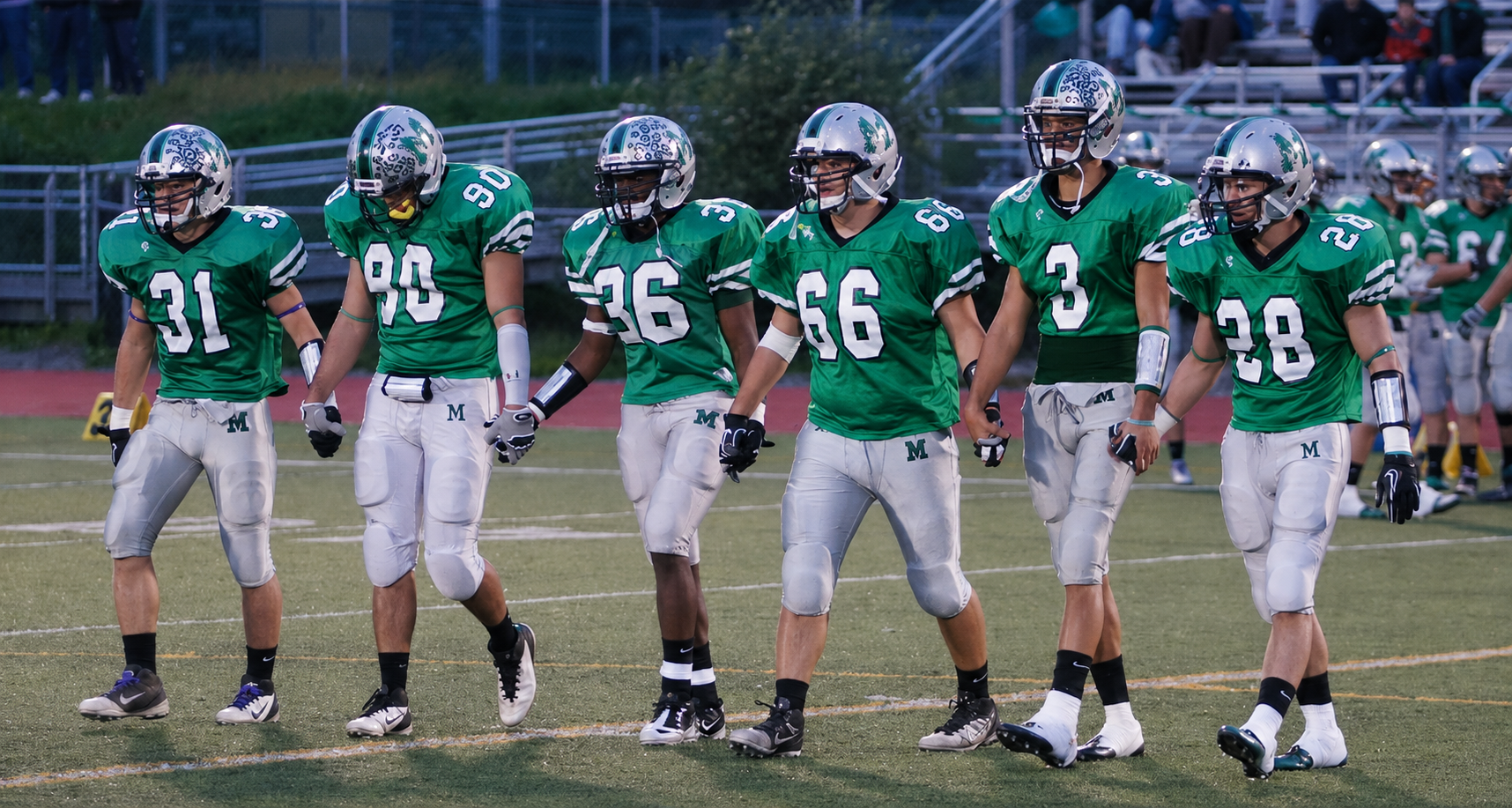
My friends and I were particularly close. We had all played football together at our local high school. Our football program was, and still is, one of the best public school programs in Massachusetts. I do not share that to brag. I share it because it gives context to the experiences we shared together and to the foundation of what became an unbreakable bond.
Weightlifting sessions at six o’clock in the morning. Long conditioning sessions in the hot summer sun. Sleepaway camp in the hills of the Berkshire Mountains. And, fortunately for us, many Friday night wins, league championships, and a coveted state championship victory.
Through the hard work, the wins, and the losses, whether we knew it at the time or not, we were developing a deep emotional connection with one another. We supported each other at our lowest, celebrated each other at our highest, and, above all else, believed in one another and stood behind one another no matter what the game, or life, threw at us.
That bond, built by pushing ourselves to our limits alongside one another and in service of something bigger than ourselves, became the foundation for friendships that would last a lifetime. So anytime I was home, one of the first things I tried to schedule was time with my friends.
Although we were all deeply committed to one another, as with most busy young men in their twenties, it was hard to get our schedules aligned. I remember trying to organize dinner plans in our group chat. Some of us were available, some were not, and some were not responding.
One of my friends was especially insistent that we meet up that night. I remember thinking, “Wouldn’t it be better to wait until we can all get together?” But he said he was going to the local Irish pub in the center of town with his girlfriend, and he expected us to meet them there.
Although I was not sure if my other friends would make it, I hopped in my car and headed downtown.
I remember arriving at the restaurant and seeing him and his girlfriend sitting closely next to one another in a booth. They were chatting, laughing, and my friend was shining that big, doofy grin everyone knew him by. I sat down with the two of them, and for a little while, it was just the three of us.
At the time, I remember my mind drifting, wondering if any of my other buddies were going to show up. But looking back on it now, given how this story plays out, I will always be grateful for those first 30 minutes of that night when it was just me, my buddy, and his girlfriend.
Eventually, another friend from our group showed up. We hung out, ate some food, had a few drinks, and caught up. My friend and I made plans to go to the gym together in the morning. Even after all those years, we still had the itch to get together and push ourselves physically, and we still got the best out of ourselves when we did it together.
We left the pub, gave each other a big hug, said “I love you,” which was a common practice in our friend group, and said, “I’ll see you in the morning.”
On the morning of May 27, 2017, I woke up early, gathered my stuff for the gym, hopped in my car, and headed out. I arrived on time, but my friend was not there yet. I did not think twice about it. He was not exactly Mr. Punctuality. So I did what I usually did: started stretching and warming up while keeping a close eye on the door and waiting for him to arrive.
As I was lunging around the gym with my big overhead Beats headphones blaring, my phone began to ring. It was another friend from our group. At that point, I was pretty locked in and focused on my workout, and as far as I knew, this friend was not planning to join us, so I clicked ignore.
The phone rang again.
Two calls in a row was unusual. Something was up.
I remember answering the call with the sound still connected to my headphones through Bluetooth. My friend was screaming, and I could not make out the words. I think I said something like, “Okay, okay, slow down.” Eventually, through the crying and screams, I heard him say, “You need to meet me at [our friend’s] house right now.”
I did not think twice. I hung up the phone, grabbed my belongings, and hopped in my car. I remember speeding out of the parking lot and running a few red lights, my mind focused only on getting there as fast as possible.
My friends were in trouble and needed my help.
While driving, I called my mom from the car. I told her I had received a distressing call from a friend, that I was headed over to meet them at my other friend’s house, and that I was not sure what was going on or when I would be home. At the time, one of our friends, the friend whose house I was driving toward, had a couple of health issues going on, and I was worried something had happened to him.
When I arrived at my friend’s house, I pulled down the long driveway and saw him and his mom standing in the front yard. At first, I felt relief. As I mentioned, this was the friend who had some health issues, and to see him upright and seemingly okay put me at ease.
I got out of my car and immediately asked, “Hey man, what’s going on?”
He did not know. He told me he had also received a distressing call from our friend but did not know what had happened.
Moments later, the friend who had called us came barreling down the driveway in his car. He got out, fell to his knees, and said, “[Our friend] is dead.”
I remember denial sweeping through me faster than a lightning bolt.
What? No way. That can’t be. We were just with him last night. He was going to meet me at the gym this morning. This has to be misinformation.
But my friend in front of me was clearly distraught and in a tremendous amount of pain. We hugged him and listened. Once he calmed down enough to talk, we began asking questions.
And then he said it.
“He killed himself last night.”
Then, silence.
My other friend and I paused and looked at each other. There was something about what he said that shifted us from questioning the news to reckoning with it.
Still, we kept asking questions. Despite the pain and conviction in his voice, it was still difficult to believe. But slowly, the gravity of the situation began to weigh in.
We decided that the three of us would drive over to our friend’s house to check in. It almost felt like we had to see it for ourselves.
I remember the three of us packing into my friend’s little sedan. We pulled out of the driveway, and when we got about a mile down the road, it really started to hit me. I felt anger and rage surge through my body. Through tears and a hoarse yell, I said to my friends in the car, “Don’t ever do this. If you ever need anything, just call. Okay? Just call.” My friends just continued to shed tears of their own.
Our friend who had passed away lived only a few miles up the road, and before we knew it, we were pulling into the driveway. There were more cars than usual, and one of his sisters was on the front porch talking to someone. We parked, opened the door, and slowly started approaching the house. His sister saw us, began crying, and came over to greet us with a hug.
It was real.
It had happened.
My friend, who had been smiling, laughing, and hugging me less than 12 hours earlier, was gone. He had taken his own life.
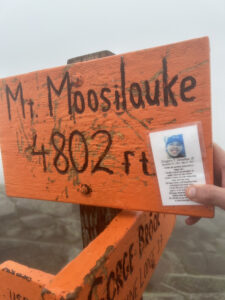 As I sit here and write this on May 26, 2026, nine years after my buddy’s passing, I am putting written words to the memory of this day for the first time. Each year, when this anniversary comes up, I try to lean into the emotion that this day holds and do something in his memory to make meaning of his passing.
In past years, I have typically gone out into the woods to reflect and be close to my friend. Solitude in nature is where I feel closest to his presence. In addition to that, I will usually post something on social media as a gentle reminder of a great life that was lived, the great loss we experienced, and what we can all do each day to honor that loss by living our own lives more fully.
Although I still plan to go outside and be with him over the course of the next day, this year I thought I would write a blog post and reflect on this event in my life, the lessons I learned, and how I see those lessons overlapping with some of the work we do here at Mountain Valley.
Fear
At the time, I do not think I would have ever looked at this event, my own experience, or the presumed experience of my friend through the lens of fear and anxiety. Now, from where I stand, I cannot help but see it that way.
There was fear he must have been feeling. Although we will never know for sure what he was experiencing, he was clearly struggling on a deep level and felt like he could not let anyone know. His best friends did not know. His girlfriend did not know. His family did not know.
For years, I struggled with ruminating over what my friends and I could have done differently to make him feel more comfortable coming forward. Was it our “macho bro” culture that kept him from feeling like he could be vulnerable? Did we make jokes or comments at times that made him think it was unsafe to share these things?
Having worked in the mental health field now for almost a decade, I have come to accept that while there may always be things we wish we had seen or done differently, we cannot fully know or control the fear, pain, or inner world another person is carrying.
Every day, I work with young people who are deeply afraid of what others think of them, even while surrounded by people who love, support, and accept them. That does not mean their environment does not matter. It does. The people around us can provide safety, reassurance, compassion, and support. But fear often lives beneath the surface, rooted in the private places of our minds, in the stories we tell ourselves about who we are, whether we are enough, and whether we are safe to be truly known.
Others can help create the conditions for healing, but they cannot do the healing for us. At some point, each of us has to begin bringing those fears into the light.
I also think about the fear my friends and I faced that day. I think about our decision to hop in the car and drive over to our friend’s family’s house, knowing that some tragedy may have just taken place. We did not blink. We did not think twice. It is incredible how brave we can be in the face of uncertainty when it involves something, or someone, we deeply value.
Lastly, I think about the subsequent fear that I, and many of us who went through that experience, have lived with since that day.
For me, it was my first time really confronting death. I had lost people I knew, but no one I was that close with. It was the first time I was forced to come to grips with my own mortality and the mortality of the people I love.
Although that may sound morbid, it has also been one of the most tremendous gifts I have ever been given. Because if you lean into fear far enough, you may find yourself standing in love and gratitude.
I am afraid of losing my life. I am afraid of losing those close to me. And because of that, I take more time to appreciate the subtle beauties of the people, places, and things that make up my day-to-day life.
This was the first time I realized that fear, although unpleasant to feel and often unruly in the mind, can also be a catalyst for recognizing and reveling in what matters most. And in many ways, that connection between fear, values, and meaningful living is at the heart of the work we do at Mountain Valley.
Making Meaning of Struggle
The idea that fear can help us identify and lean into our values is connected to something bigger, something we see every day at Mountain Valley: life’s hardest moments can sometimes become part of life’s most meaningful growth.
In the moment of struggle, no one wants to hear that one day this pain may become the start of something beautiful. In fact, when others try to point that out too soon, it can feel obnoxious, dismissive, and out of touch.
But with time, space, and deep reflection, we may begin to see how pain can shape us in meaningful ways.
None of that makes the loss easier, and none of it makes his death make sense. But losing my friend in this way became part of what ignited my passion for entering the mental health field. That passion led me to take a job at a psychiatric hospital during the end of my graduate school years. It was during that job that I came across the Occupational Therapy Mental Health Fellowship program at the University of North Carolina. At UNC, I trained alongside some of the best mental health occupational therapists in the country, and I met a beautiful young colleague who I am now lucky enough to call my wife.
My work at UNC inspired me to seek out more holistic, nature-based settings for healing, which eventually led me to Mountain Valley.
And now, as I sit here typing these words, I have an incredible job at a tremendous institution, a beautiful wife, two loving kids, and a home in the forests of Vermont.
Do I wish my friend were still alive? Do I wish he had been at my wedding? Do I wish my kids had one more “uncle” who would have loved them more than anything?
Of course I do.
But I can honestly say that I do not know where I would be, or what I would be doing, if this event had never happened in my life.
All this to say: we never know the ripple effects that a moment of struggle and immense pain may have down the line. It is hard to judge the meaning of a chapter when you are deep in the throes of the events unfolding within it.
But if you keep reading, and the story continues to play itself out, you may be surprised by the meaningful role that chapter played in the arc of the story. You may be surprised by the role that chapter played in the development of the main character. And maybe, just maybe, you may look back on that dark chapter with more appreciation for the role it played in getting the story to where it is now.
For our youth and families at Mountain Valley, many are deep in the chapter of struggle.
And for many of you reading this, you may be too.
But as we close out May, Mental Health Awareness Month, I encourage everyone to keep doing one thing:
Pick up the pen of your life and just keep writing.
You never know where the story may lead.