

MOVING MOUNTAINS

Resources

When Outpatient Treatment Isn’t Enough for School Avoidance

For many families, the plan is straightforward.

Find a good therapist. Work hard. Give it time.

In many cases, that works.

Outpatient therapy helps countless children and adolescents overcome anxiety disorders, OCD, and school-related fears. But for some families, despite everyone’s best efforts, the situation continues to worsen. School attendance becomes increasingly inconsistent. Anxiety grows larger. Life becomes smaller. Parents begin wondering whether they are missing something.

One of the most difficult questions families ask is:

How do we know when outpatient treatment isn’t enough anymore?

There is no single answer. There is no magic number of missed school days or therapy sessions. But there are patterns that often suggest a child may need a more intensive level of care.

Recognizing those patterns early can make a meaningful difference.

When School Anxiety Stops Being About School

Parents often begin by focusing on school attendance.

That makes sense. School refusal is usually the most visible problem. But over time, many families realize the issue extends far beyond getting their child through the front doors of the building.

School avoidance is often the outward expression of something much larger.

A teenager who cannot attend school may also begin avoiding friends. Driving. Sports. Restaurants. Family vacations. Medical appointments. College planning. Job interviews. Sleepovers. Even ordinary errands.

Life slowly becomes organized around avoiding situations that provoke anxiety.

Sometimes this happens so gradually that families barely notice. They adapt. Accommodations accumulate. Expectations quietly shift downward.

Eventually, success becomes defined not by participation in life, but by the absence of crisis.

That is often the point at which families begin asking whether outpatient treatment is providing enough support.

Signs That Anxiety May Require a Higher Level of Care

Every child is different, and treatment decisions should always be made collaboratively with qualified professionals. Still, there are several situations in which a more intensive anxiety treatment program may be worth considering.

Anxiety Continues to Worsen Despite Appropriate Outpatient Treatment

Not every therapist specializes in treating anxiety disorders or obsessive-compulsive disorder. But even when families are working with clinicians who use evidence-based approaches like Exposure and Response Prevention (ERP) or Cognitive Behavioral Therapy (CBT), progress sometimes stalls.

The child understands the skills.

They know what they “should” do.

But they remain unable to put those skills into practice consistently in daily life.

School Attendance Continues to Decline

Perhaps mornings become longer and harder.

Maybe absences increase.

Assignments pile up.

Accommodations multiply.

Parents spend hours negotiating, reassuring, transporting, or helping their child simply make it through each day.

Eventually, the family’s energy becomes devoted almost entirely to getting through tomorrow morning.

When simply attending school consumes that much emotional bandwidth, it may be time to ask whether the current level of care matches the severity of the problem.

Anxiety Is Interfering With Multiple Areas of Life

School refusal rarely stays confined to school.

Children may withdraw socially, stop participating in activities they once loved, lose independence, reverse their sleep schedule, avoid responsibilities, or spend increasing amounts of time isolated at home.

When anxiety begins affecting nearly every domain of functioning, treatment often needs to become broader and more immersive than a weekly therapy appointment can provide.

Family Life Revolves Around Anxiety

Parents naturally want to help.

Over time, however, many families find themselves unintentionally organizing daily life around preventing distress.

Schedules change.

Plans get canceled.

Siblings adjust.

Parents divide responsibilities.

Everyone becomes increasingly focused on avoiding situations that might trigger anxiety.

This is not a sign of poor parenting. It is what loving families often do when someone they care about is suffering.

But when anxiety begins dictating how the entire family functions, additional support may be needed.

Why Weekly Therapy Sometimes Isn’t Enough

This is not because therapy has failed.

It is because anxiety disorders often require children to practice doing difficult things repeatedly in real life.

A therapist may spend fifty minutes helping a teenager prepare for exposure work.

The challenge is what happens during the other 10,000 minutes of the week.

If a child spends nearly all of those hours avoiding feared situations, seeking reassurance, engaging in compulsions, or depending on accommodations, it can become incredibly difficult for new learning to take hold.

The brain continues receiving the same message:

“Avoidance keeps me safe.”

Intensive treatment changes that equation.

Instead of practicing courage once a week, children have repeated opportunities to face anxiety, tolerate uncertainty, build confidence, and receive coaching while those moments are actually happening.

For many kids, that repetition becomes the catalyst for meaningful change.

What Intensive Anxiety Treatment Looks Like

Many parents hear the words “residential treatment” and understandably imagine hospitalization or crisis care.

That is not what specialized residential anxiety treatment is designed to provide.

Programs that focus on anxiety disorders and OCD typically spend far less time talking about anxiety than people expect.

Instead, treatment focuses on helping young people gradually re-engage with life.

Children practice facing feared situations.

They learn to tolerate uncertainty.

They reduce avoidance.

They build independence.

They strengthen emotional flexibility.

They participate in school, relationships, recreation, exercise, responsibilities, and everyday experiences that anxiety has gradually pushed out of their lives.

For families, treatment often includes learning how to reduce accommodations that unintentionally keep anxiety functioning, while supporting their child in moving toward discomfort rather than away from it.

The goal is not simply symptom reduction.

The goal is restoring functioning.

Looking Beyond the Next School Day

Parents often ask whether they should simply push through another semester.

Sometimes that is appropriate.

Sometimes outpatient treatment just needs more time.

But sometimes families find themselves asking the same questions every August, every January, or every Sunday night.

“Maybe this year will be different.”

Hope matters.

But hope alone rarely changes entrenched anxiety patterns.

One helpful question is not:

“Can my child survive another semester?”

Instead ask:

“Is my child’s world becoming larger or smaller?”

Anxiety almost always moves life toward smaller.

Treatment should move life toward larger.

Toward more independence.

More flexibility.

More confidence.

More participation.

More willingness to experience discomfort in pursuit of a meaningful life.

When to Consider Residential Treatment for Anxiety

Choosing a residential anxiety treatment program is one of the biggest decisions a family can make.

It is not the right fit for every child.

But when anxiety or OCD has begun interfering with school attendance, friendships, independence, family functioning, and everyday life despite quality outpatient care, continuing to repeat the same approach may simply produce more of the same results.

The goal is never to remove children from their lives.

The goal is to help them return to those lives with greater confidence, greater flexibility, and the knowledge that anxiety no longer has to determine what they can and cannot do.

If treatment helps a child reclaim school, friendships, family relationships, and the future they want for themselves, then the question is not whether they spent time in residential treatment.

The question is how much of their life they were able to get back.
MOVING MOUNTAINS

Resources

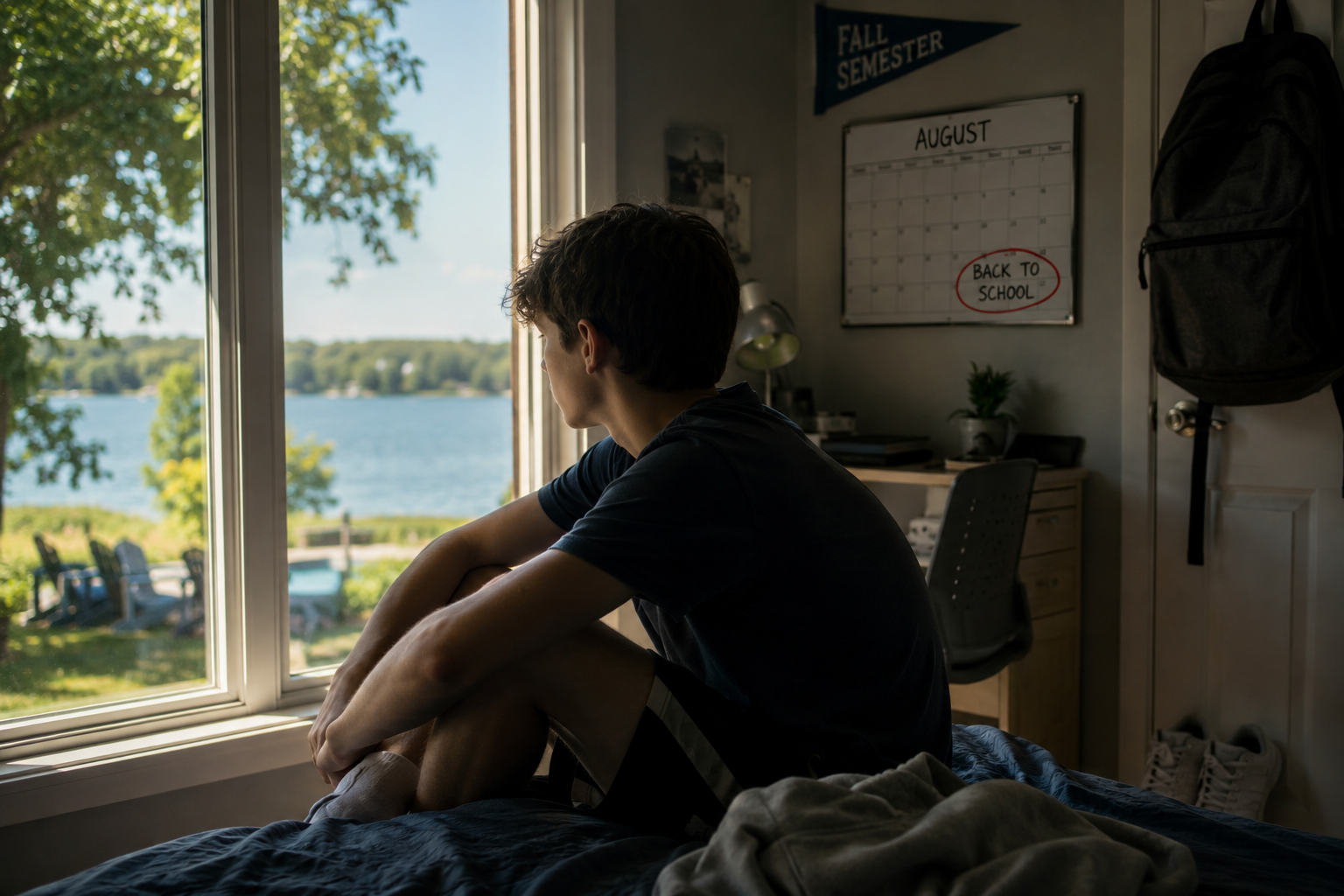
Why Summer Can Be the Worst Time to “Wait and See” About Anxiety

For many families, summer feels like a long exhale.

The school refusal eases. Morning battles disappear. Stomachaches fade. Panic lessens. Kids laugh more. The house becomes calmer. After a brutal school year filled with anxiety, avoidance, conflict, and emotional exhaustion, parents often feel like they finally have their child back.

Naturally, many families begin asking the same question:
Maybe things are getting better?

And sometimes they are.

But often, what looks like recovery is actually something very different.

Anxiety disorders frequently appear to improve during the summer not because the anxiety itself has healed, but because many of the triggers that activate the anxiety are temporarily gone. School pressures disappear. Performance demands lessen. Social evaluation decreases. Structure relaxes. Fear-producing situations become easier to avoid.

The nervous system settles because the child is no longer confronting what feels threatening. That relief is real. But relief is not always the same thing as recovery.

This is one of the reasons summer can become such a dangerous time to adopt a “wait and see” approach toward treatment.

The Illusion of Improvement

Anxiety is deeply contextual.

A child who is overwhelmed during the school year may look dramatically different in July than they did in March. Parents often see meaningful changes:

– less irritability,
– fewer meltdowns,
– more laughter,
– improved sleep,
– reduced conflict,
– and fewer visible symptoms.

The temptation is to conclude that the anxiety itself is resolving.

But if the improvement depends entirely on the removal of demands, the stability may be far more fragile than it appears. If a child only feels okay when they do not have to attend school, socialize, tolerate uncertainty, complete work, navigate peer relationships, or face evaluation, then the underlying anxiety has often not been addressed. The feared situations have simply been removed from the equation.

This is important because avoidance works incredibly well in the short term. That is precisely why anxiety disorders become so powerful.

When avoidance reduces distress, the brain learns:
“This is how I stay safe.”

Over time, the vicious circle strengthens. Relief reinforces retreat, and retreat reinforces fear. Meanwhile, families understandably mistake the absence of crisis for genuine healing.

Summer Avoidance Often Looks “Normal”

One of the reasons this dynamic is so difficult to recognize is that summer avoidance rarely looks as alarming as school-year avoidance.

During the academic year, anxiety becomes visible quickly because school forces engagement. Kids must wake up, leave the house, tolerate structure, interact socially, perform academically, and face discomfort repeatedly.

In the summer, however, life often becomes flexible enough to accommodate anxiety almost invisibly.

A teenager isolates in their room most of the day, but “they’re decompressing after a stressful year.”

A child avoids social situations, but “summer schedules are inconsistent anyway.”

Sleep patterns completely reverse, but “it’s summer vacation.”

An adolescent refuses camps, jobs, sports, or travel, but “they just need a break.”

Parents often feel relieved simply because the intensity of the suffering has decreased. After months of chaos, many families desperately want peace, connection, and a normal summer together. That desire is understandable.

But anxiety disorders do not typically heal through retreat from life. More often, they grow quietly inside shrinking worlds. And the shrinking can happen slowly enough that everyone adapts to it.

Over time, the family’s definition of “doing okay” can quietly shift downward. A child who once played sports, saw friends regularly, traveled easily, and participated fully in school may now spend most of the day isolated at home, yet everyone feels grateful simply because there are fewer visible meltdowns or battles.

That is part of what makes anxiety disorders so deceptive. Life can become progressively smaller while the home temporarily feels calmer.

When “Here We Go Again” Sets In

One of the most damaging aspects of delaying treatment is that anxiety rarely returns in the fall as a completely fresh experience. Kids remember.

They remember the panic from the previous school year. They remember the dread on Sunday nights, the stomachaches in the parking lot, the exhaustion of white-knuckling through classes, the embarrassment of falling behind, the social fears, the nurse visits, the incomplete work, the tears, the shutdowns, and the feeling of watching everyone else move through life more easily than they can.

So when school starts back up and the anxiety returns, it often doesn’t just reactivate fear. It shakes confidence.

Many kids enter the fall thinking:

– “Here we go again.”
– “I thought I was better.”
– “Why does this keep happening to me?”
– “Maybe I’m never actually going to get better.”

That hopelessness matters.

Over time, untreated anxiety can begin reshaping the way a child sees themselves. The issue stops feeling like “I’m struggling with anxiety” and starts becoming “this is just who I am.” Kids begin organizing their identity around fragility, limitation, and avoidance.

The fear becomes larger not only because the triggers return, but because the child now expects failure before the year even begins. Anticipatory anxiety starts earlier. The dread becomes more rehearsed. The return to school begins feeling less like a challenge and more like confirmation of a feared identity.

And each cycle can deepen the problem.

Every time anxiety disappears only because demands are removed, the brain learns the same lesson again:
“I can only feel okay when I escape.”

That makes the return to school feel more threatening each year. The contrast between the safety of avoidance and the demands of real life becomes sharper. Confidence erodes further. Avoidance patterns become more automatic and ingrained.

This is one of the reasons anxiety can become harder to treat over time if left unaddressed. Not because children are incapable of getting better, but because the anxiety becomes increasingly woven into routines, expectations, identity, and daily functioning.

The longer the pattern repeats, the more life can begin organizing itself around fear.

Why Summer Can Actually Be the Best Time for Treatment

Ironically, many of the reasons families avoid treatment during the summer are the exact reasons summer can be one of the most effective times to intervene.

Without the constant pressure of school, kids often have more emotional bandwidth to engage meaningfully in treatment. Families are less reactive. Schedules are more flexible. There is more space for reflection, skill-building, exposure work, family work, and behavioral change before another academic year begins.

Rather than spending the entire summer recovering from anxiety, families can use the summer to prepare for life beyond it.

That does not mean children should lose opportunities for rest, fun, friendships, travel, or downtime. Those things matter tremendously. Kids need play, connection, leisure, and recovery.

But there is an important difference between restoration and avoidance.

The goal of treatment is not to eliminate discomfort from a child’s life. The goal is to help children build the confidence and flexibility to tolerate discomfort without retreating from life itself.

Summer can provide a uniquely valuable runway for that work.

Instead of entering the fall already defeated and overwhelmed, children can begin developing:

– healthier routines,
– increased distress tolerance,
– more confidence facing feared situations,
– improved emotional regulation,
– stronger social engagement,
– greater independence,
– and a growing belief that anxiety does not have to control their lives.

Thinking Beyond the Next Semester

One of the hardest parts of parenting an anxious child is resisting the understandable desire for immediate relief.

Of course parents want peace after a difficult year. Of course they want their child to relax, smile, and enjoy summer. Of course they want to believe things are finally getting better.

But anxiety disorders often require families to think beyond the emotional weather of the moment.

The real question is not:
“Does my child seem calmer right now?”

The real question is:
“Is my child building a life organized around engagement or around avoidance?”

Because anxiety almost always encourages the second path.

Children do not become resilient by never feeling anxious. They become resilient by learning they can face anxiety without surrendering their lives to it. Confidence usually comes afterward — after tolerating discomfort, after facing feared situations repeatedly, after discovering they are more capable than the anxiety tells them they are.

That process rarely happens accidentally.

Moving Toward Fall with Intention

Summer can create the illusion that anxiety has disappeared when it has simply gone dormant. The absence of school demands often lowers distress enough that families understandably hope the problem has resolved itself.

Sometimes it has.

But when anxiety has already begun interfering with school attendance, friendships, independence, family functioning, emotional regulation, or participation in life, waiting passively for it to heal on its own can allow the problem to become more deeply rooted.

Anxiety disorders generally do not improve through avoidance and time alone.

More often, they improve when children gradually learn that discomfort is survivable, that fear does not need to dictate behavior, and that they are capable of engaging with life even when anxiety is present.

The goal is not simply to help kids survive another school year.

The goal is to help them reclaim the parts of life anxiety has slowly convinced them to abandon.